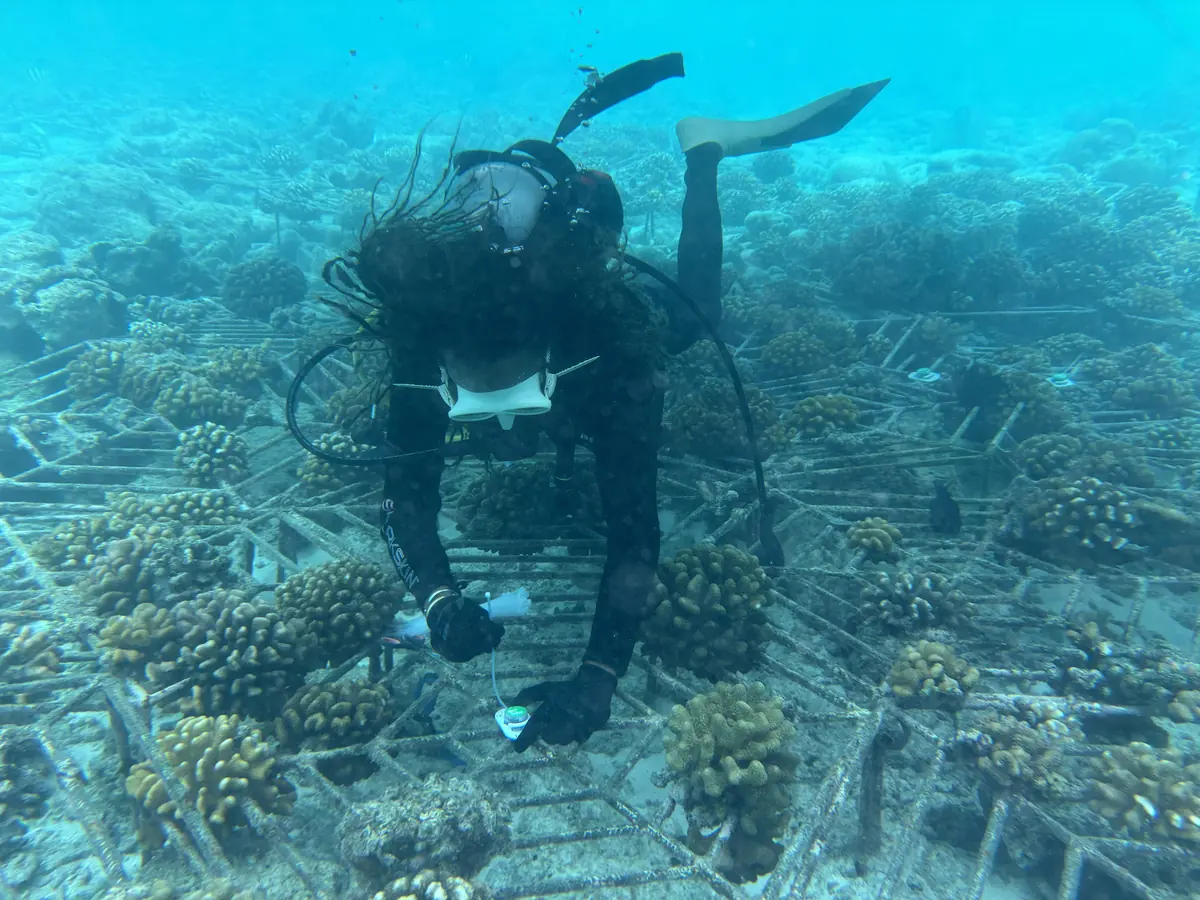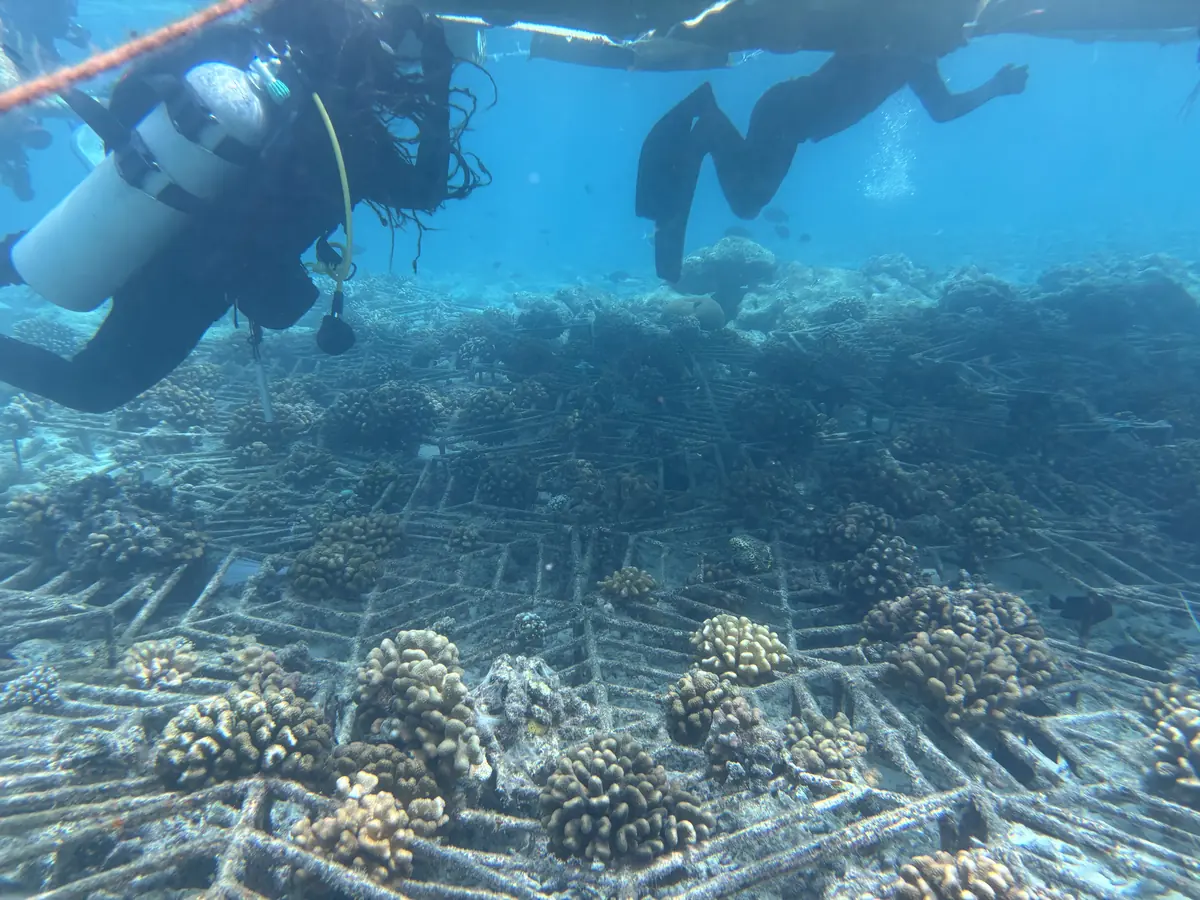
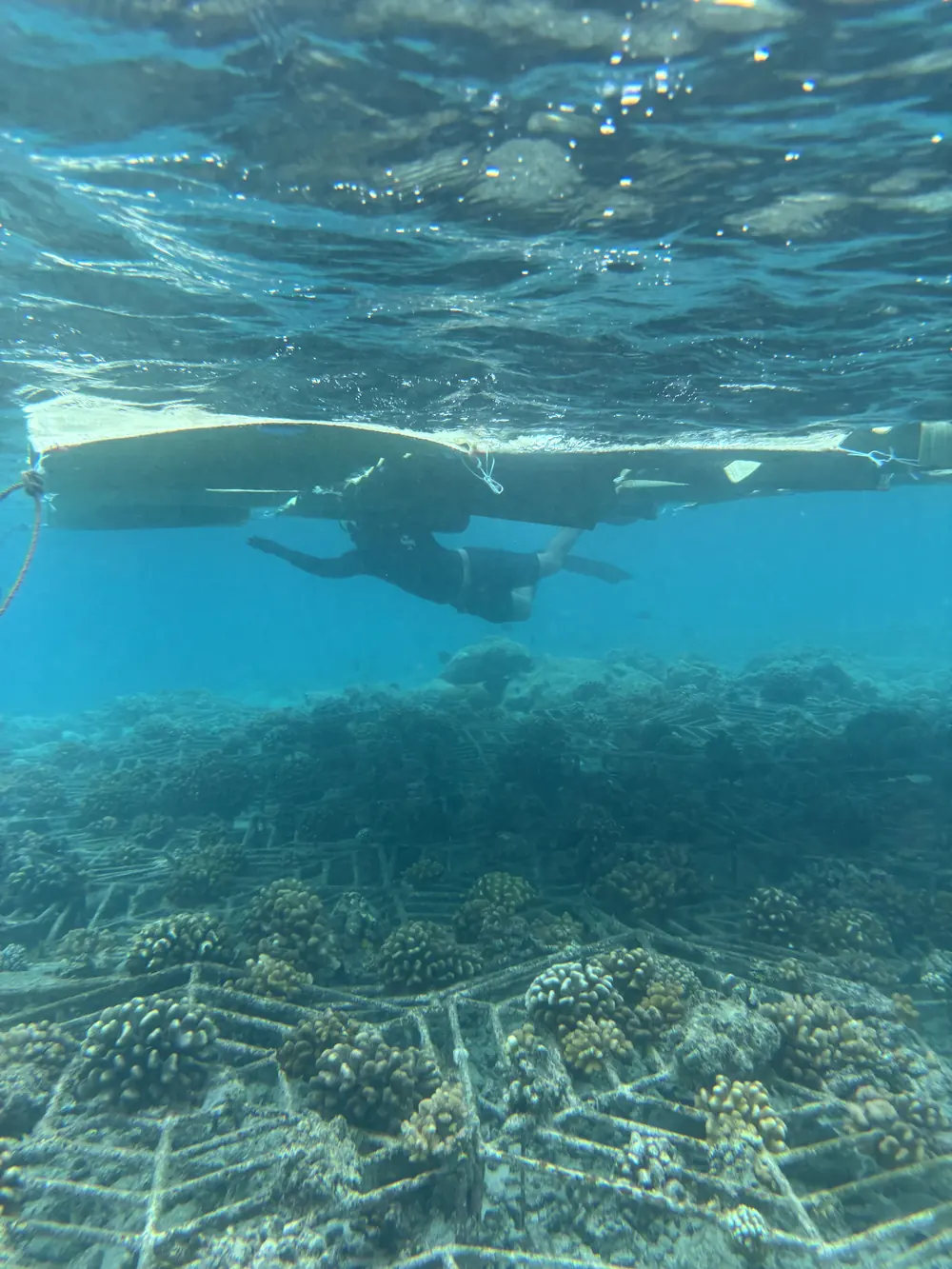
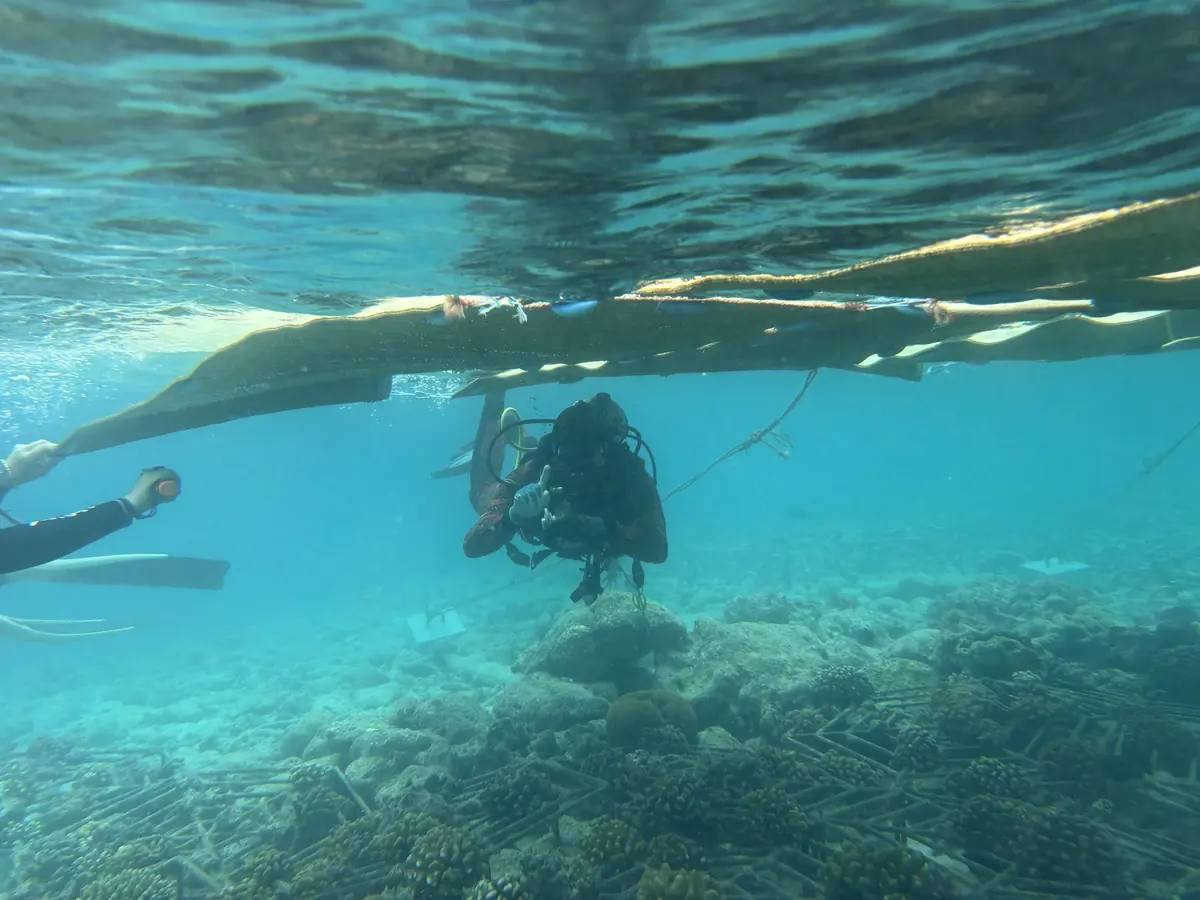
A diver checks coral beneath the Ocean Shade Blanket
Ocean Shade Blanket

Shade the reef.
Reduce the stress.

Create a window for recovery.

A recoverable, grass-based shade. Deployed during marine heatwaves, it cooled reef water by 1.5–3°C in field trials.

The Problem

Reefs are running out of time

84%

of the world's reefs are under heat stress after the fourth global bleaching event (2023–2025).

Source: ICRI, 2025

Bleaching is not death — yet

Stressed coral bleaches before it dies. Lower the stress in time, and it can recover.

Healthy
Stressed
Bleached

Intervene before mortality

The Gap

Today's tools are too slow or too hard to scale

Restoration is slow

Coral grows 1–2 cm a year. Reefs take years, even decades, to recover.

Shading is hard to scale

Existing shades are costly, rigid or hard to retrieve at scale.

What's needed: immediate · low-impact · recoverable

Our Solution

A temporary thermal refuge

Grass-based mat+Buoys+Recoverable frame

Grass-based mats are fixed to a flexible floating frame above the reef, cutting the light and heat that reach the coral. The frame and anchors are reusable.
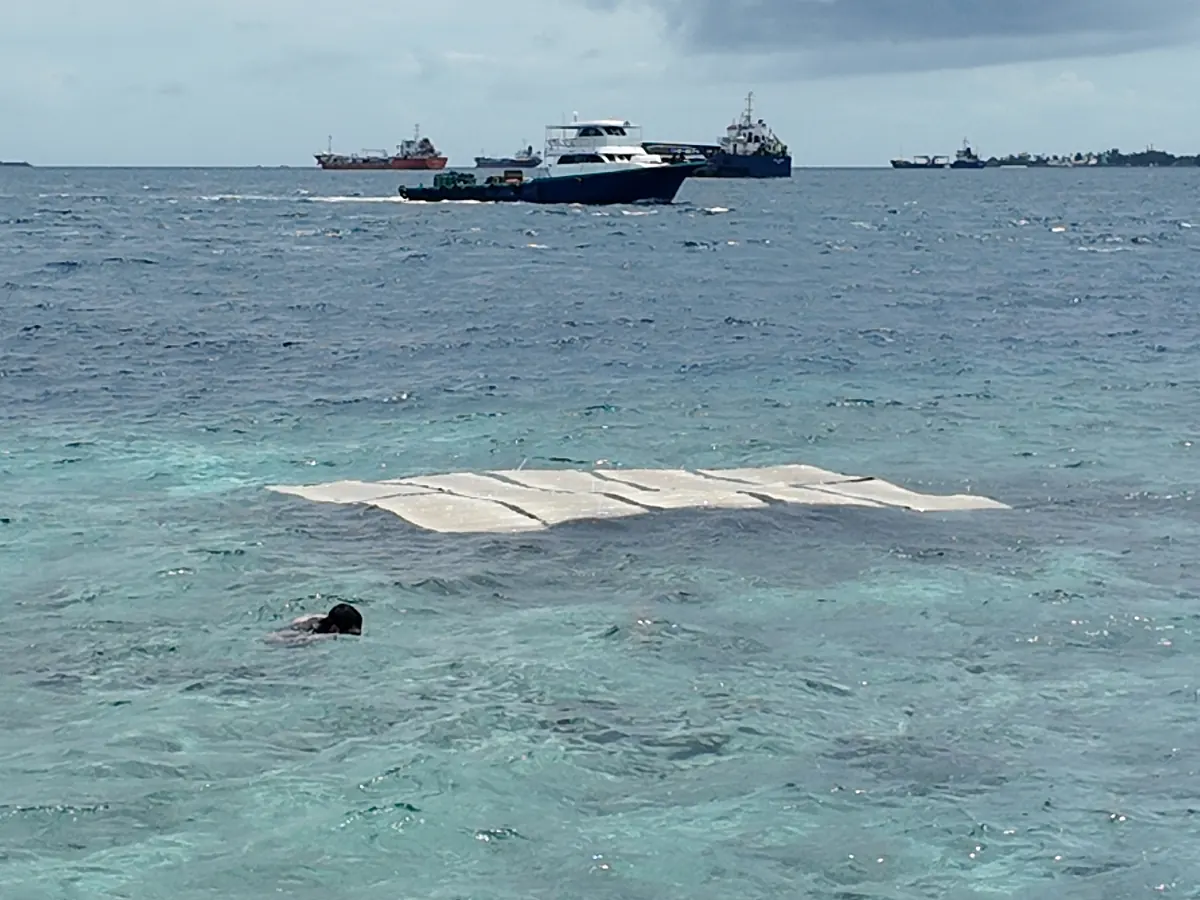
The blanket floating at the surface over a reef in the Maldives
Above water: floating over the reef
The blanket seen from below, shading the coral
Below water: shade over the coral
1

Grass-based material

Mats made from natural grass fibers.

2

Light gaps

Gaps between the mats let some light through, so coral can keep photosynthesizing.

3

Moves with the waves

Soft and flexible, it follows the swell instead of resisting it.

4

No extra turbulence

Water keeps flowing calmly over the reef, with no added eddies on the seabed.

How It Works

Deploy only when it matters

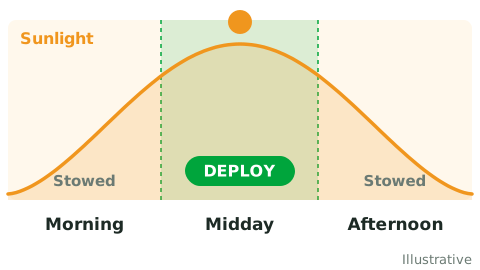
Shade during heat stress. Retract in between.
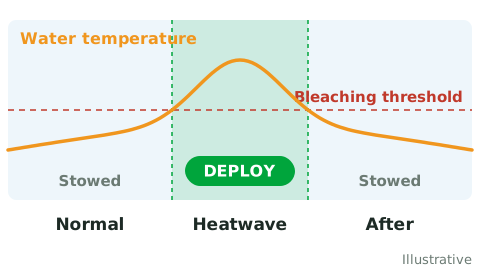
Seasonal

Seasonal timing: the blanket is deployed only while water temperature is above the bleaching threshold

Daily

Daily timing: the blanket is deployed around midday when sunlight peaks

Timing and duration are set based on local conditions, such as water temperature, sunlight, tides and reef type.
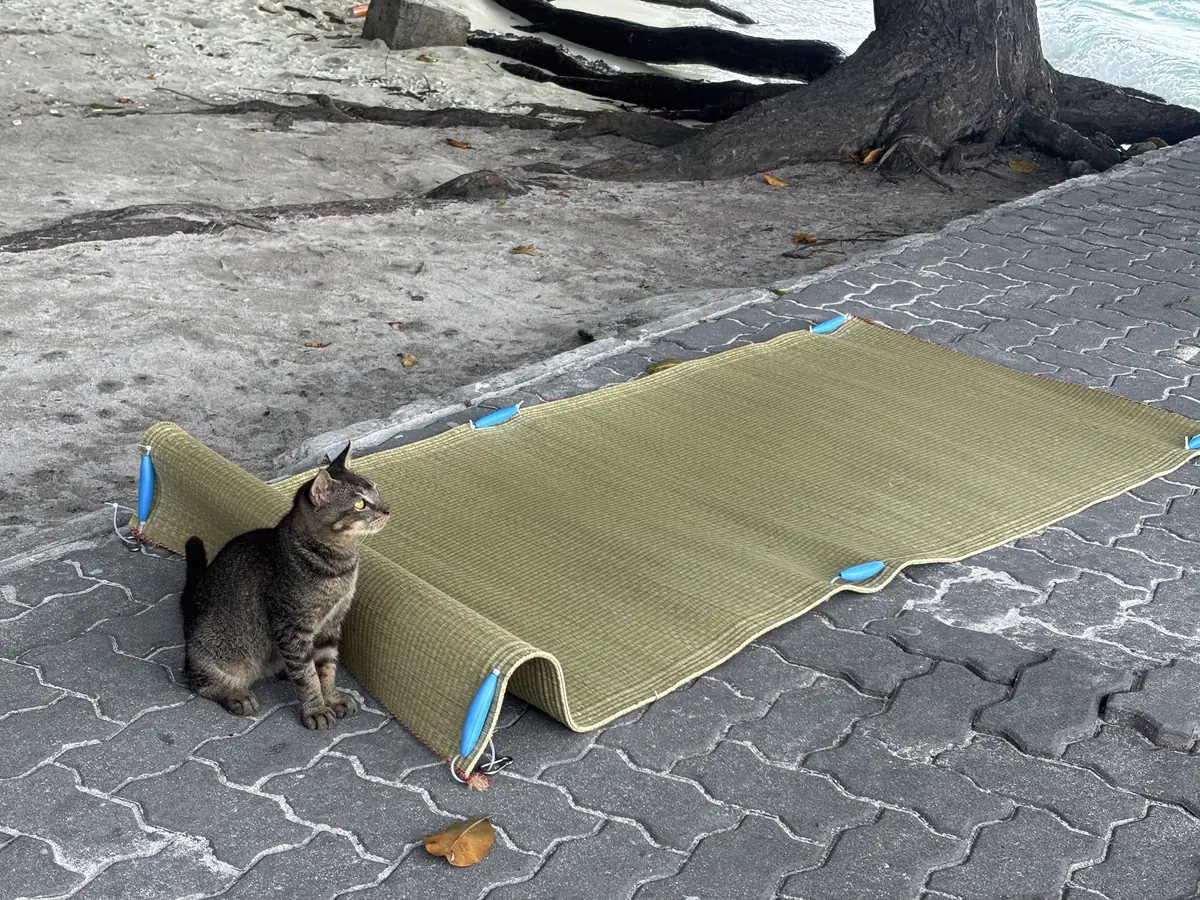
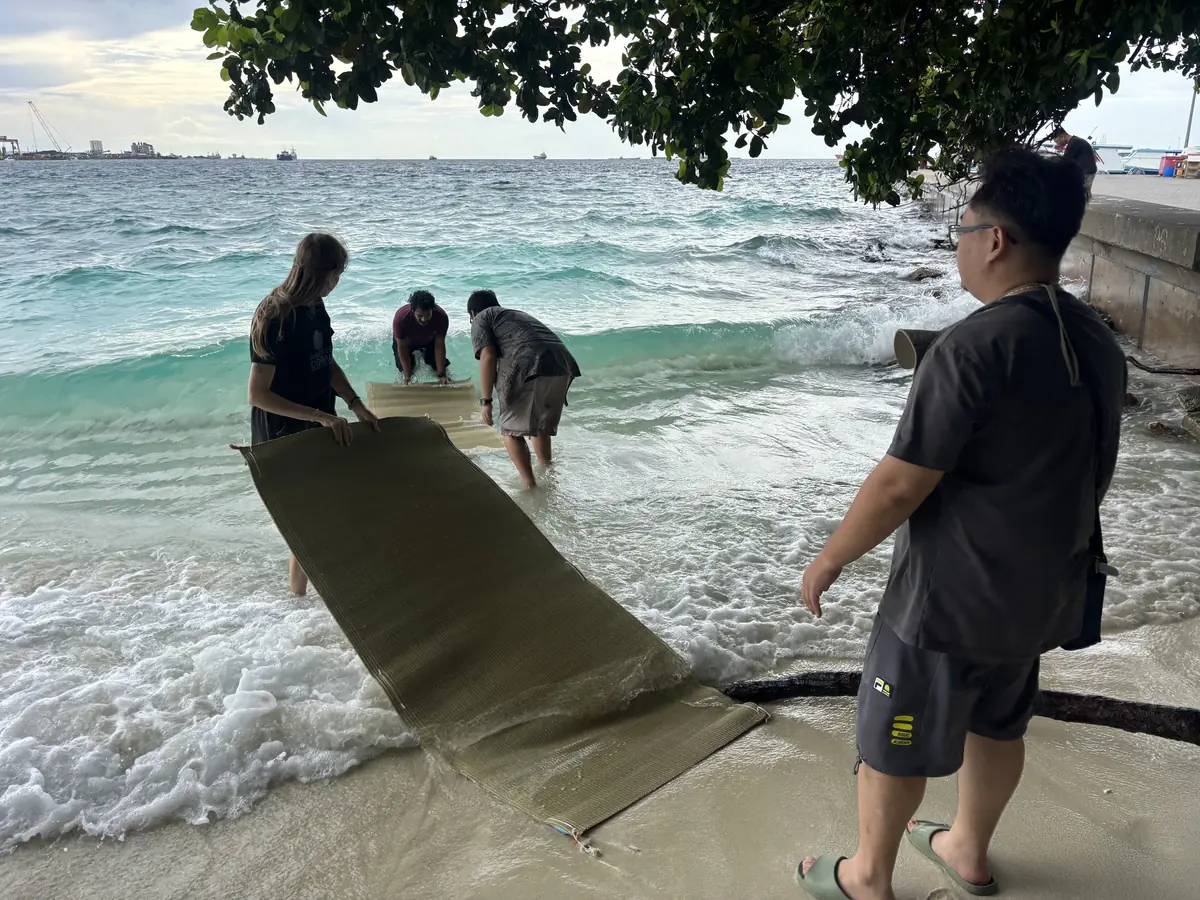
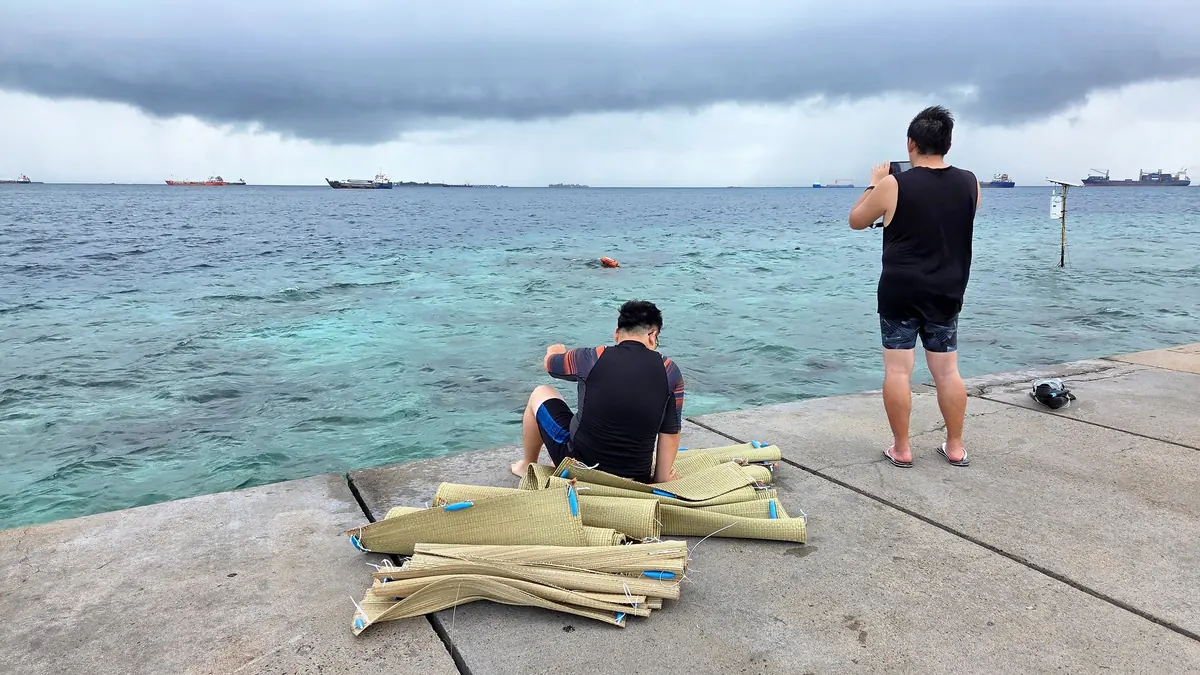
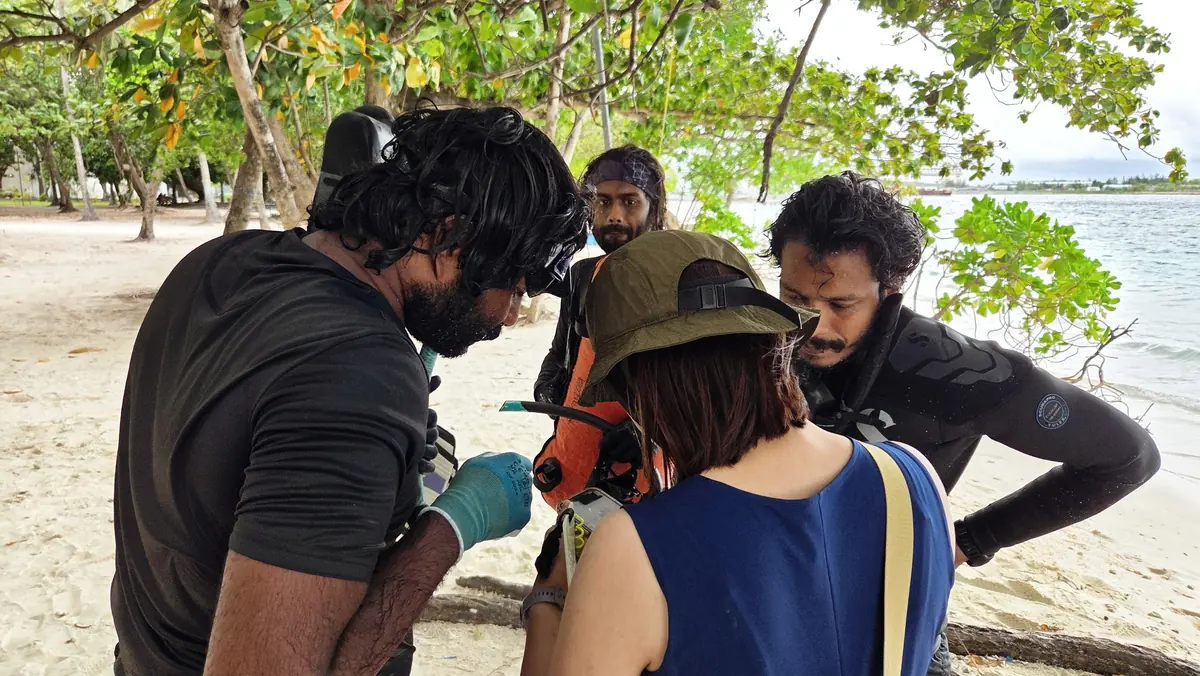
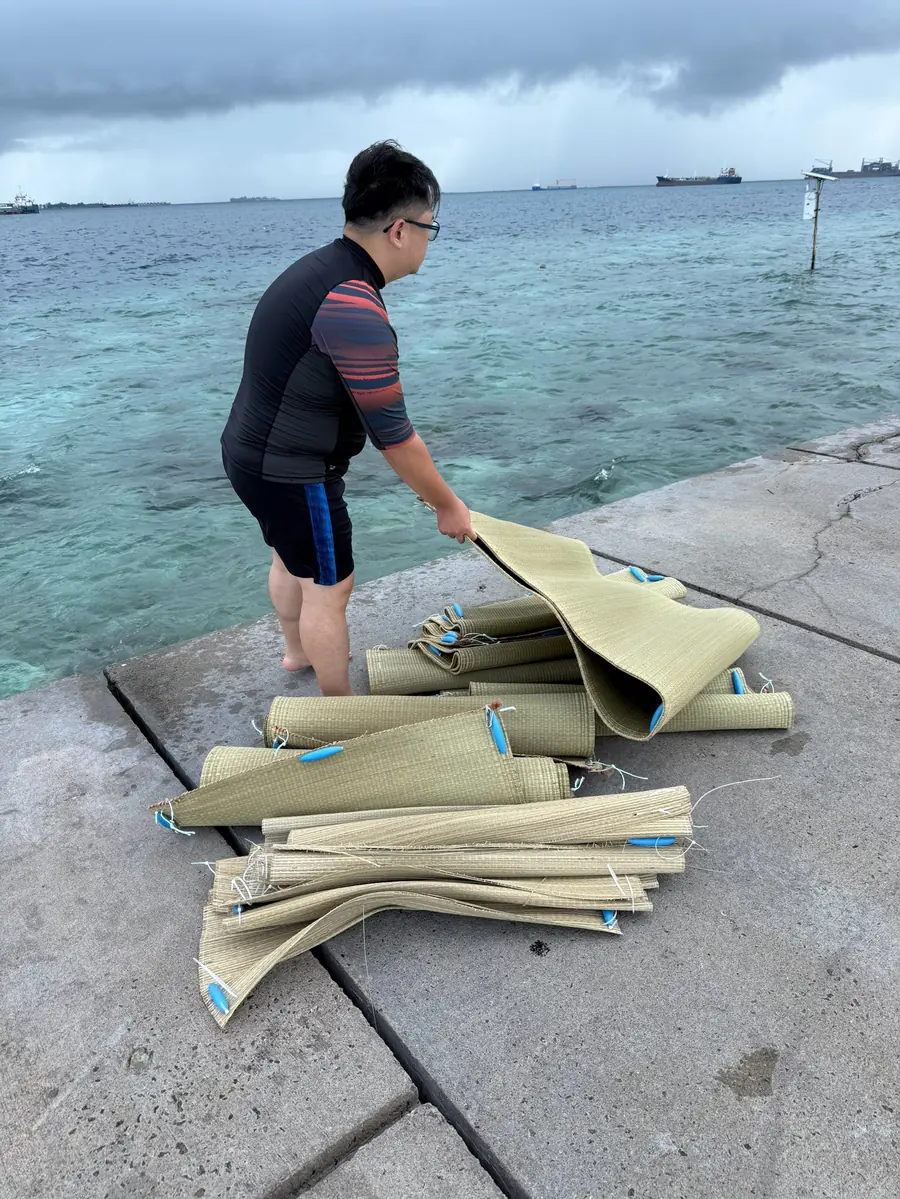
The blanket laid out on shore
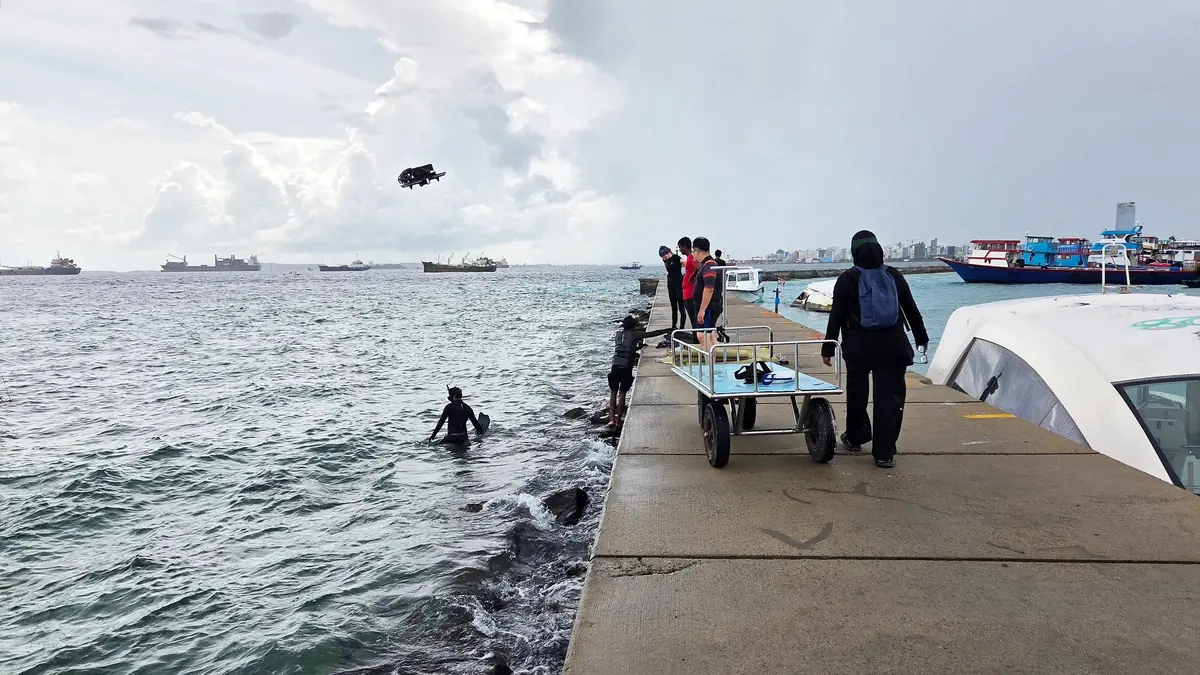
Carrying the blanket into the sea
Preparing blankets on the pier
Field Results

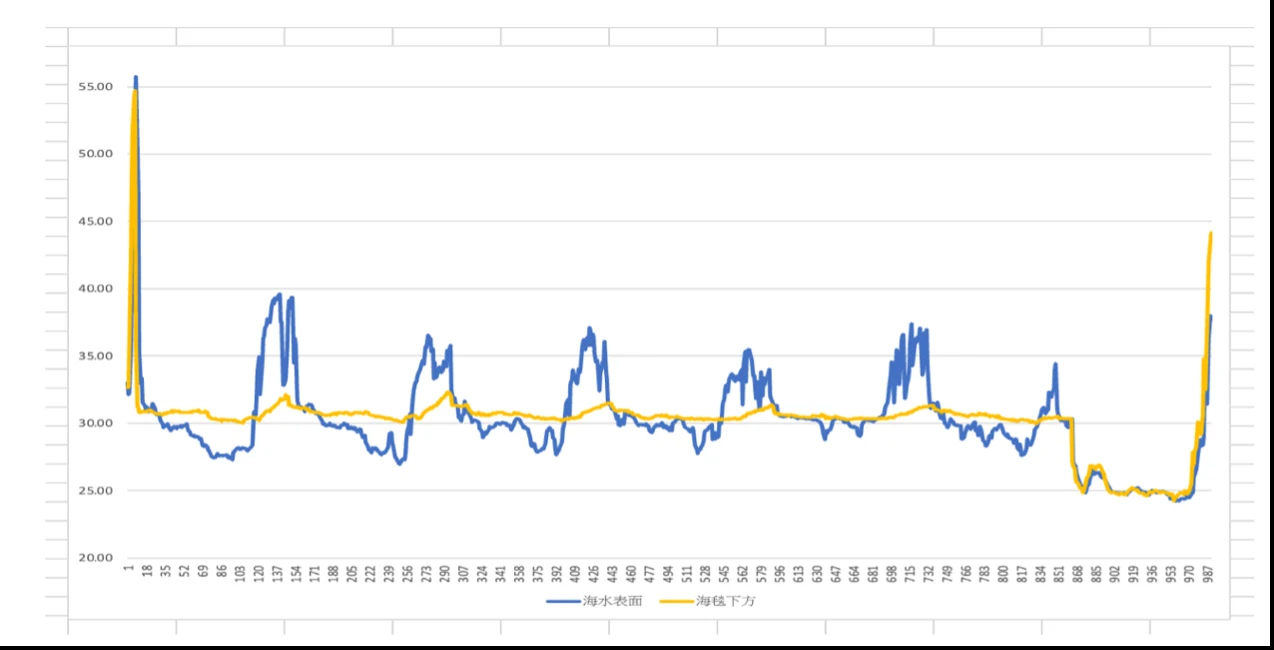
Up to 3°C cooler

Tested in Palau and the Maldives. The physical effect is proven.

1.5–3°C

Cooler than unshaded reef

2 sites

Palau 2025 · Maldives 2026

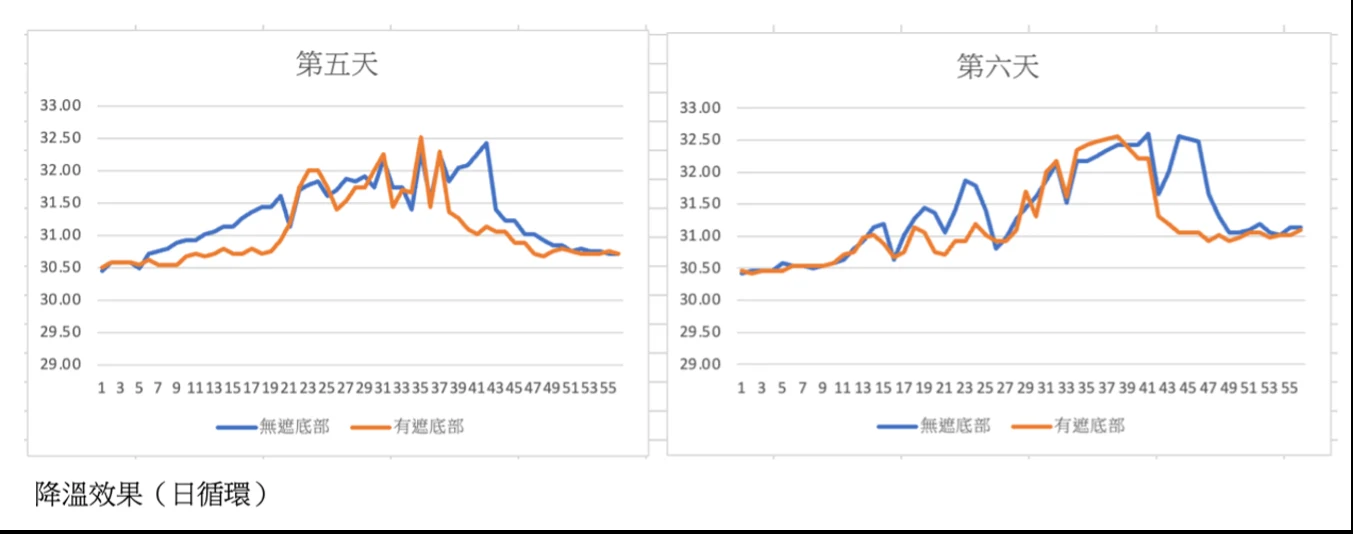
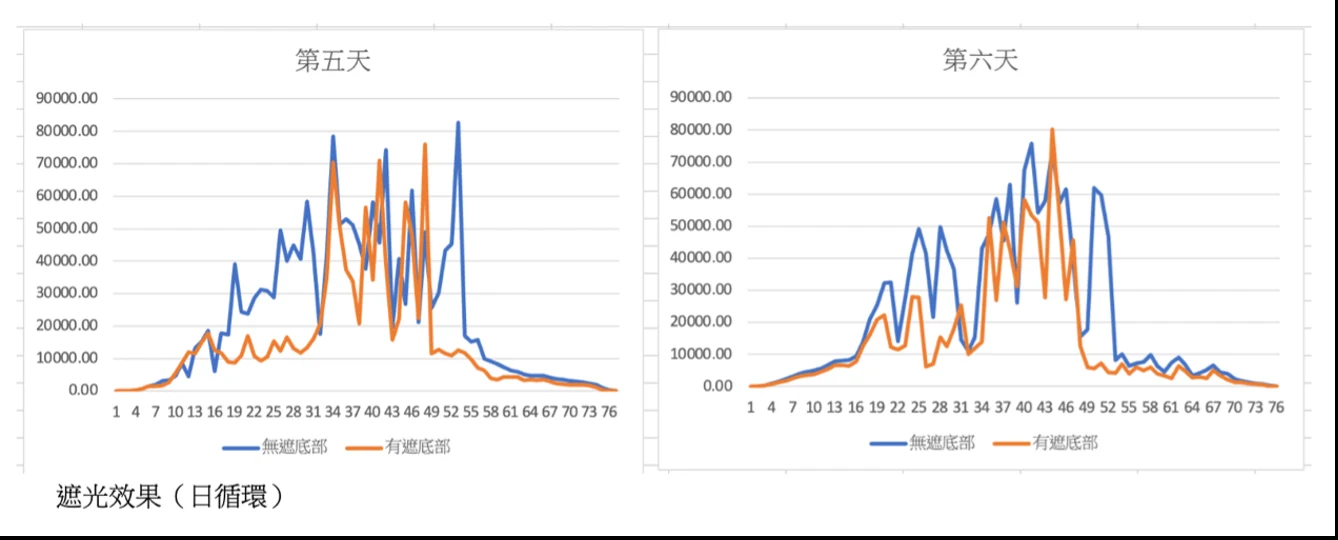
Palau trial, 2025

Water temperature on days 5 and 6: the shaded reef floor stays cooler in the afternoon
Water temperature (°C), days 5–6
UnshadedShaded
Light on days 5 and 6: the shaded reef floor receives much less light
Light intensity (lux), days 5–6
UnshadedShaded
One week of data: the sea-surface reading spikes daily while the reading below the blanket stays stable
Temperature (°C), one week
Sea surfaceBelow the blanket

Measured with HOBO data loggers. Chart labels in Chinese. Early anchoring let the blanket drift with the tide at times, which explains some variability.

TOP 12OCEANLOVE 2026
Recognition

OceanLove Innovation Awards 2026 — Top 12 finalist

The only team from Taiwan, selected from nearly 500 teams across 91 countries.

Work With Us

Built with local partners

We're looking for partners to pilot, support or simply exchange ideas.
  • Governments & reef managers
  • NGOs
  • Research institutions
  • Corporate ESG teams
  • Buyers
  • Anyone interested

Get in touch

Contact

Get in touch

Send us a message, or email info@wondergreener.com.