Do you trust the "compostable" label on PBS straws? Key raw materials like BDO and SA are often petrochemical-derived, resulting in high energy consumption and a heavy carbon footprint. This 3-minute analysis cuts through the green marketing myths of "Bioplastics" and "Plant Fiber" products.
Deconstructing Greenwashing: The "Plant Fiber" Myth Begins with Raw Materials
Have you noticed the rise of products labeled "Plant Plastic," "Biodegradable Resin," or "Bioplastics"? From "Plant Fiber Straws" and "Plant Fiber Toothbrushes" to "Biodegradable Eco-Cups," the terms sound almost too good to be true, promising plastic durability while claiming environmental safety.
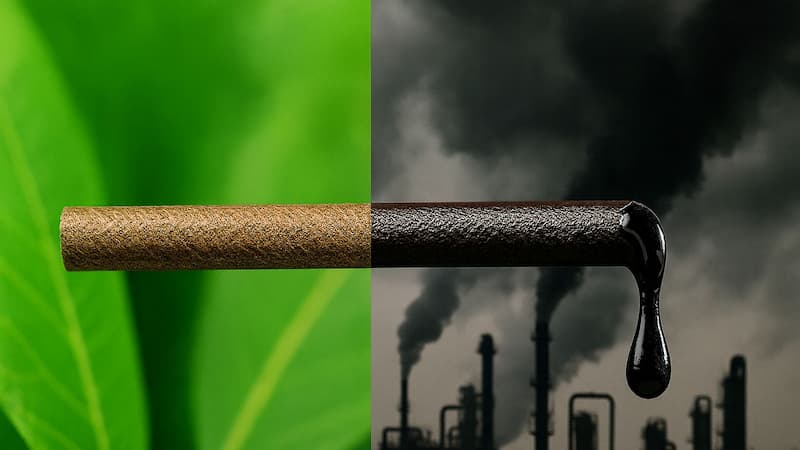
But did you know? The most common ingredient in these so-called "plant plastics" is actually PBS (Polybutylene succinate). In other words, the "plant straw" you use for your drink is fundamentally still a plastic product manufactured by the chemical industry.
I. What is PBS?
PBS(Polybutylene Succinate) is a material labeled as "biodegradable plastic" that is commonly manufactured into single-use items such as straws, packaging films, cutlery, and takeaway boxes.
At first glance, this sounds very impressive, as the terms "biodegradable" and "plant" are practically synonyms for eco-friendly. But to understand if it is truly sustainable, we must first break down its two key raw materials:
- Succinic acid
- 1,4-Butanediol, BDO
Although these two names may sound unfamiliar, they are the true protagonists of this "plant plastic" masquerade.
II. Succinic Acid: The Myth of Plant-Derived vs. Petrochemical Reality
Theoretically, succinic acid can be converted from plant sugars (such as corn starch or sucrose) via "fermentation." This method is known as the "bio-based succinic acid".
Many brands use this claim to promote "our plastic comes from plant sources" , leading consumers to believe the entire material is free from the petrochemical industry.
But in fact, the actual proportion utilizing the fermentation method is very low.
Most PBS manufacturers still utilize the traditional petrochemical synthesis route. Manufacturing succinic acid via the hydrogenation reduction of maleic anhydride. This production chain requires high pressure and high temperature, a source of hydrogen, and metal catalysts. The entire process is energy-intensive and emits carbon dioxide.
📌In other words, while succinic acid "can" be plant-derived, a large proportion still comes from the petrochemical industry in reality.
The so-called "plant source" is often merely a marketing concept, rather than the reality of the supply chain.
III. Butanediol: The Petrochemical Core of PBS Plastic, Almost Entirely Reliant on Chemical Synthesis
Compared to succinic acid, butanediol (BDO) is much more straightforward : it is almost entirely petrochemical-derived. Currently, over 95% of the world's butanediol is synthesized from petrochemical raw materials (such as naphtha and propylene).
Only a very few manufacturers (such as BioAmber and Genomatica) are attempting to produce BDO using biological fermentation, but production volumes are limited and costs are extremely high.
📌In other words, even if succinic acid is plant-derived, as long as the other half, butanediol, remains petrochemical-derived, the overall PBS is still an extension of petrochemical products.
Moreover, the polymerization of PBS requires high-temperature dehydration and metal catalysts such as tin, zirconium, or titanium — all of which are characteristic of conventional petrochemical manufacturing processes. As a result, the “green” appearance of plant-based plastics often masks a production chain that is still energy-intensive and carbon-heavy.
IV. From the Lab to the Straw: A Not-So-Green Production Line
- Raw material extraction
Regardless of whether plant sugars or petrochemical raw materials are used, they must first be converted into reactive intermediates (succinic acid, butanediol). Both fermentation and chemical synthesis produce wastewater and byproducts. - Polymerization reaction
PBS polyester is formed through high-temperature dehydration and metal-catalyzed condensation — a power-intensive process that requires long reaction times. - Final processing & molding
PBS resin must then undergo drying, hot pressing, or injection molding before it can take the form of a "plant straw."
Throughout this entire chain, only some of the succinic acid is truly plant-derived.
The remaining steps are largely indistinguishable from conventional plastic production.
V . “Biodegradable, plant-based”: Sounds green, but isn’t necessarily eco-friendly
The term "biodegradable, plant fiber" is a reassuring one, but its very existence represents a victory of marketing logic.
It leverages the public’s trust in “plant-based” and vague fear of “plastic”, combining them into a term that sounds both natural and high-tech.
However, if the feedstocks are still petrochemical-based, the process remains
energy-intensive, and decomposition requires specific conditions, no amount of green labeling can make these materials truly sustainable.
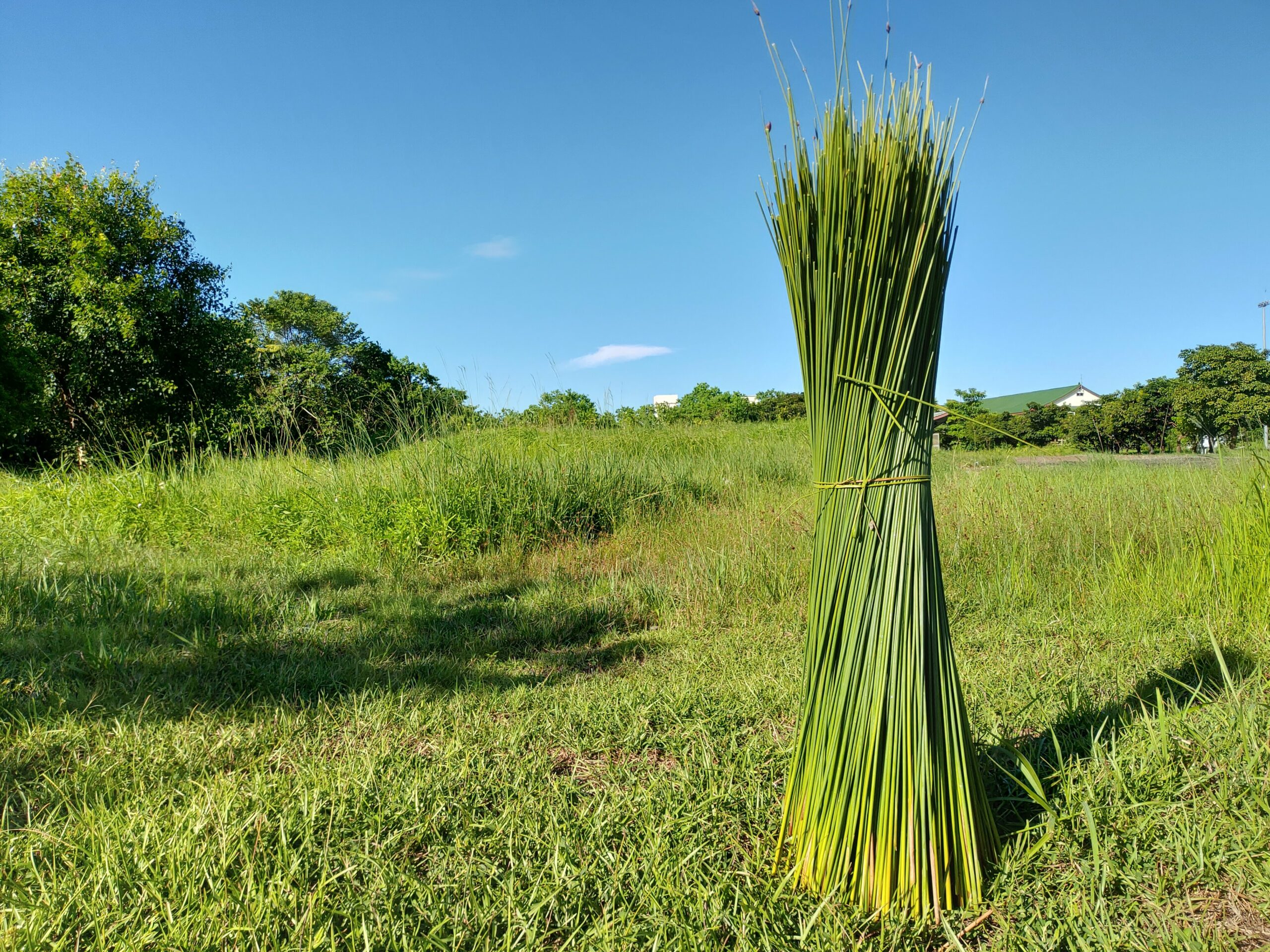
🌱Real eco-friendly materials don’t just appear plant-derived. They must be able to return to nature and integrate seamlessly into ecological cycles — Grass Straws.
“Biodegradable, Plant Fiber” Isn’t a Green Shield
As consumers value sustainability, brands must be honest about their materials.
The problem with PBS straws isn’t the material—it’s the misleading “plant-based” tag.
Once greenwashing is standard, genuine sustainability is hidden from view.
Next time you see “biodegradable” or “PBS plant-fiber straws”, remember
"Green” doesn’t always mean sustainable, and “plant” isn’t always natural.
指的是企業或品牌,透過「誇大、模糊或不實」的行銷手法,讓消費者誤以為其產品或服務對環境非常友善,但實際上對環境的效益卻微乎其微,甚至根本沒有。
植物吸管通常指由「整株植物」直接做成的吸管,例如:蒲草吸管、小麥吸管、竹吸管、蘆葦吸管。
植物纖維吸管則是將「植物纖維打成粉、加入生物塑膠(PBS、PLA 等)」再製成吸管,本質上仍是塑膠製品,例如:甘蔗渣吸管、咖啡渣吸管、茶葉渣吸管、玉米渣吸管。
不是。植物纖維吸管雖然名字聽起來自然,但它必須加入 PBS、PLA 等生物塑膠原料才能成型,因此不屬於天然植物吸管。