Are the "plant fiber straws" marketed today—boasting ingredients like coffee residue, sugarcane pulp, tea leaves, or corn starch—truly 100% natural? This article exposes the truth about their composition: They are simply a blend of "plant powder" mixed into biodegradable plastics (PBS / PLA). This article will guide you through the 5 major pitfalls of these products, including their potential petrochemical content and poor degradability, helping you steer clear of greenwashing.
The "plant fiber straw" you think you're getting is not the plant you imagine.
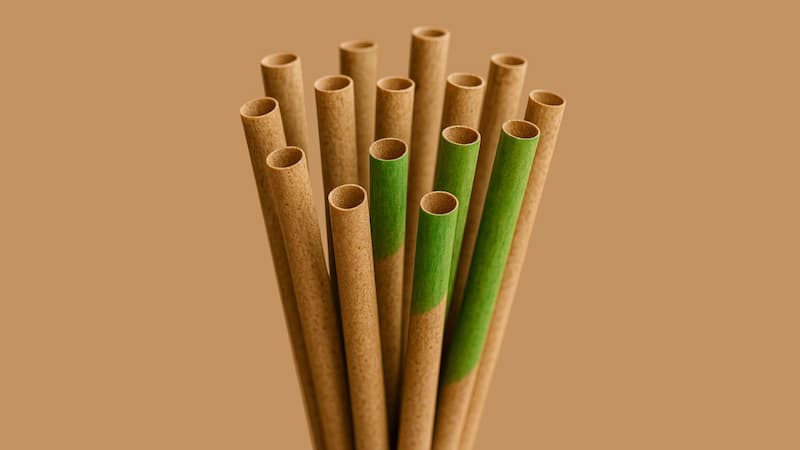
Plant fiber straws" have recently proliferated across beverage shops, retailers, and major brands, with packaging prominently displaying keywords like "100% plant-based" or "eco-degradable." While they appear very natural and harmless, the truth is, most of these straws are not made from whole plants. Instead, the plant fibers are shredded and then added to a plastic material called PBS(Polybutylene Succinate) . This is the new term currently favored by the industry — "Plant Plastic", "Biodegradable Resin", and and "Biodegradable Plastic." While it sounds like "plastic made from plants," the reality is, it is just plastic with plant ingredients. While it appears sustainable, it is actually a classic case of Greenwashing.
I. Plant Fiber≠Pure Plant
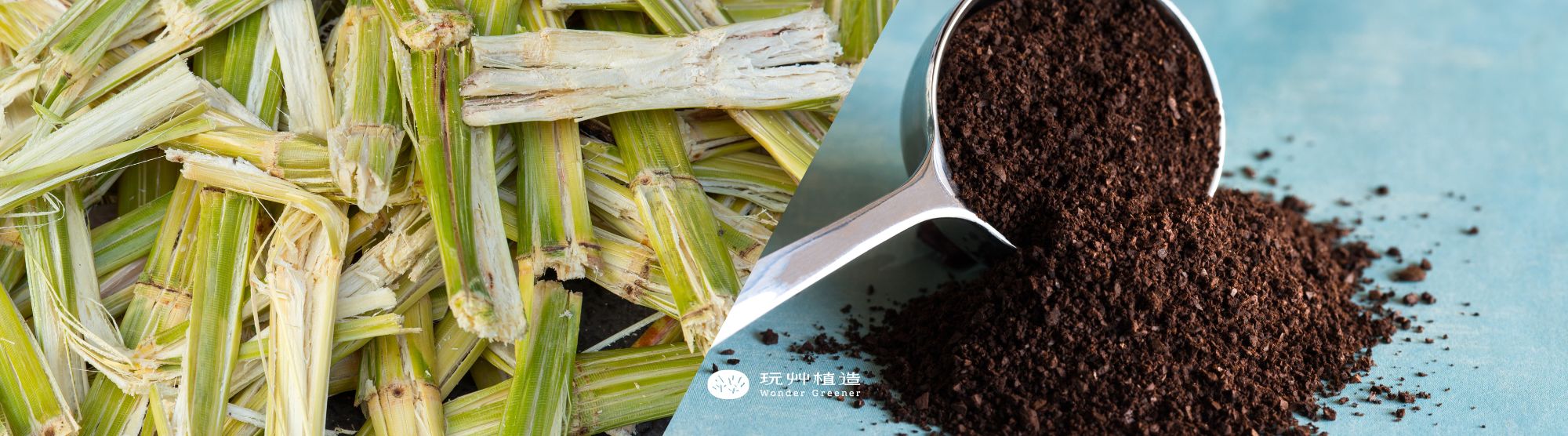
Plant fiber straws are made by pulverizing materials like rice straw or bamboo, mixing with polymers such as PBS or PLA, and molding under high heat. They retain some plant texture and color, but this is only superficial.
What truly allows the straw to "take shape" and maintain its structure is the plastic base, such as PBS.
💡Structurally, it is a synthetic polymer, not pure natural material.
II. The False Facade of "Bioplastics"
"Plant Plastic" sounds more innocuous than "Bioplastic" but the reality is, it is just a marketing packaging of PBS straws.
Manufacturers highlight that succinic acid can be fermented from plant sugars (like corn starch), but the other half—1,4-butanediol is mostly "petrochemical-derived."
These chemical raw materials must undergo multiple processes, including high-temperature polymerization, dehydration, and condensation, consuming a large amount of energy and generating by-products. Ultimately, PBS remains a chemical plastic derived from industrial manufacturing processes。 只是它披上了「植物」的外衣,看起來比較乾淨而已。
💡Plant Plastic ≠ Plant. It is merely "Plastic with Plant Lineage.
III. "Biodegradable ?" Don't Celebrate Too Soon
While many PBS straws are marketed as "naturally biodegradable," the reality is that the rate of degradation depends heavily on environmental conditions. PBS requires sufficient microorganisms, moisture, and temperature to be slowly broken down into carbon dioxide and water. If they are dropped in dry soil, drainage ditches, or on beaches, these conditions are simply not met resulting in incomplete decomposition, fragmenting into microplastics that enter the water bodies and ecosystems. So, While “biodegradable,” it doesn’t mean it safely disappears in the natural environment.
💡Sustainability is not about the label. It's about origin and destination.
IV. Plant Content ? Nobody Knows
Another issue is: Currently, there are no regulations mandating the disclosure of the actual percentage of plant fiber。 只要材料裡含有一點植物來源成分,就可以宣稱「植物纖維吸管」。
This is akin to a "juice-containing beverage" that has only 1% actual juice, but whose packaging is covered with photos of fresh fruit. Consumers are naturally misled into thinking they have chosen a far more eco-friendly product.
💡This ambiguous rhetoric is a classic case of "greenwashing."
V. The Cost of Greenwashing : Brand Trust
Before discussing the cost, however, we must first understand:
What exactly is "Greenwashing"?
What Is Greenwashing?
It refers to the act of using a "green image" or misleading claims to conceal an environmentally unsustainable reality.
In simple terms, Greenwashing is a fake eco-friendly marketing. Companies utilize advertising, packaging, or rhetoric to make consumers believe a product is eco-friendly, while in reality, it may still be highly polluting, energy-intensive, or contain plastic.
- Stating Only Half the Truth (Hidden Trade-offs)
It selectively emphasizes a small advantage—such as "plant ingredients"—
While concealing a much larger problem, like the embedded plastic content. - No Evidence (Unverifiable Claims)
Making claims that the product is "biodegradable" or "carbon neutral," yet failing to provide any supporting tests or certification. - Using Vague Terminology (Vagueness)
Utilizing appealing yet undefined terms like "natural", "green" or "eco-friendly." - Fake Logos, False Certifications (False Labels)
Packaging features leaf graphics, Earth logos, or seemingly official seals, all of which are actually self-designed. - Irrelevant Claims (Misdirection)
The claim is technically correct but irrelevant.
Example: Advertising "CFC-free," a substance already globally banned. - The Lesser Evil (Choosing the 'Less Bad' Option)
The product is fundamentally unsustainable, but is promoted as "less harmful."
Examples: "greener plastic bags" or "low-carbon fuel." - Outright Fabrication (Direct Lying)
The most severe scenario involves falsifying data and forging certifications to deliberately mislead consumers.
A truly sustainable choice is not just about having an appealing name, but is able to safely return to the earth and leave no ecological burden.
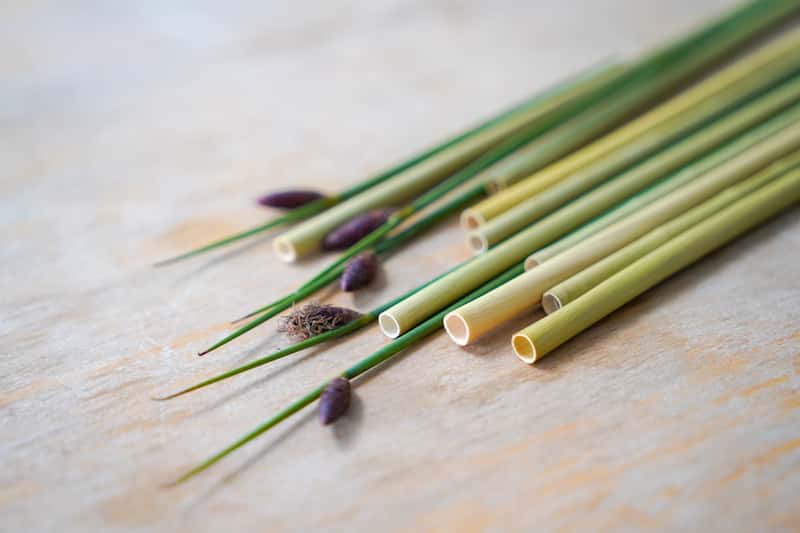
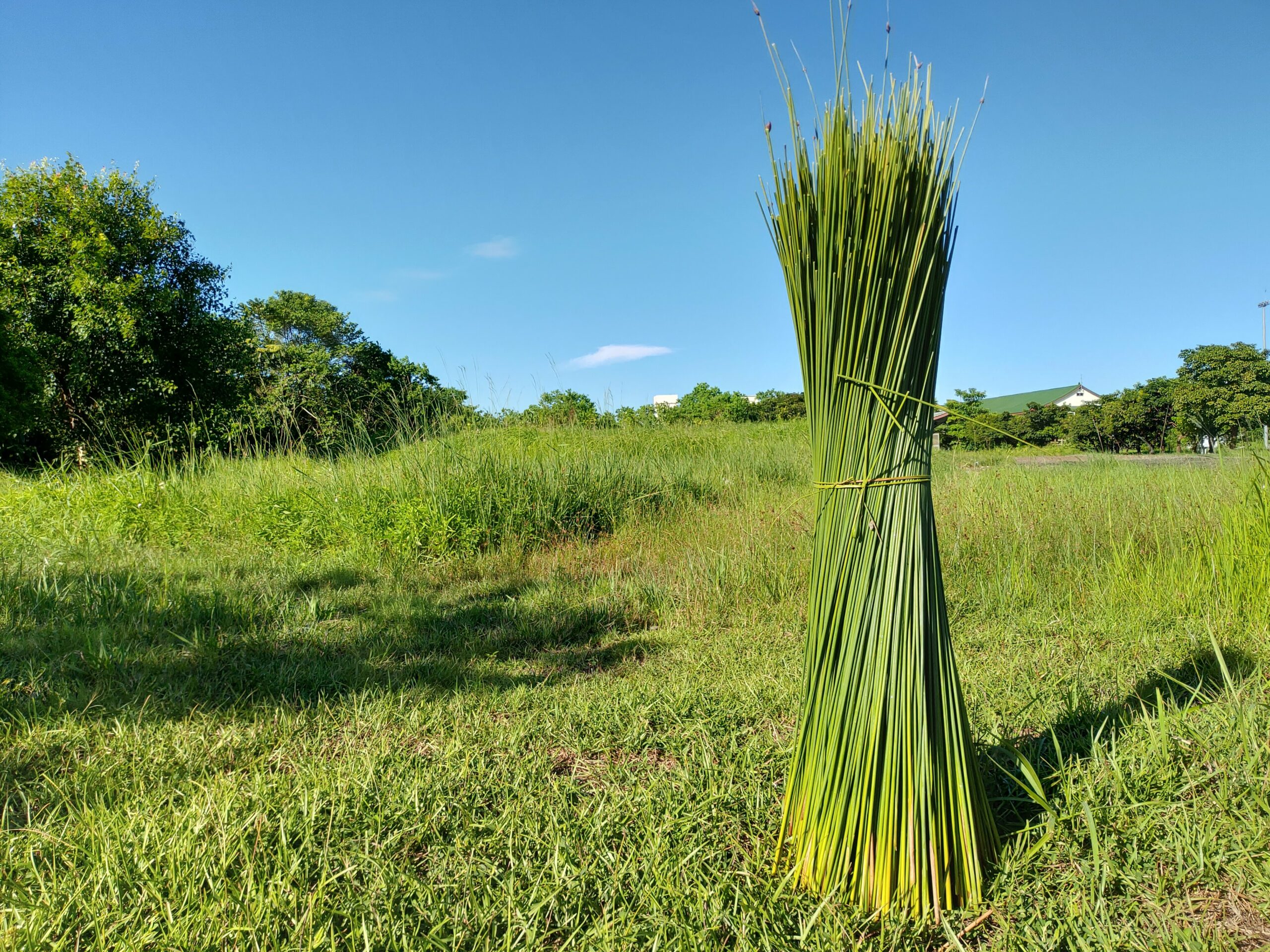
For example, Lepironia Grass Straw , the material is cut directly from the stem of the entire natural sedge/grass plant, requiring no polymer mixing or high-temperature chemical reactions. After use, it can fully decompose in the natural environment, returning to the soil and water cycle, and leaving zero microplastics because it simply behaves like a fallen leaf.
This is not merely "replacing plastic" but a sustainable approach that allows it to "safely return to the earth."
Don't be fooled by the word "plant"
When "sustainability" turns into a business
the market inevitably produces more and more products that "appear green"
but are not necessarily truly green.
Behind terms like "plant fiber straws", "plant plastics" and "PBS straws"
lies a complex chain of chemical and energy-intensive processes.
The "plant straw" that truly returns to nature has long existed: Grass straw.
蒲草吸管是用一種叫做 蒲草(Lepironia Articulata) 的植物,直接裁切、烘乾後做成的。蒲草本身具有天然的中空結構與堅韌纖維,因此天生就長得像吸管,不需要加工,也沒有任何添加物。保留了植物原本的顏色、紋路和粗細,所以每一支都是獨一無二的存在。
其實蒲草以前常拿來做榻榻米,如今變成更環保的日常選擇。
蒲草吸管從採收到成品,全程使用天然工法,不添加任何化學藥劑。製作流程包含:
1.清洗淤泥:去除泥沙與雜質
2.裁切成吸管長度:依飲料店常用尺寸製作
3.去除外膜:提升潔淨度與使用手感
4.烘乾脫水:確保耐用度並避免發霉
5.紫外線+臭氧雙重消毒:達到食品級安全
這樣的製程讓蒲草吸管保持自然原始的狀態,沒有塑膠、沒有加工物質,也因此每根吸管的紋路、顏色都略有不同,是天然產品的特色。
Grass straw是由天然植物(蒲草)直接裁切、烘乾後製成,不含塑膠、無化學添加,使用後能在自然環境中分解。
biodegradable straws(例如 PLA、PBS、植物纖維吸管)多半是以生物塑膠或部分植物澱粉再加工製成,需要特定的工業堆肥環境才能分解,在自然環境中通常不會真正消失。
植物吸管通常指由「整株植物」直接做成的吸管,例如:蒲草吸管、小麥吸管、竹吸管、蘆葦吸管。
植物纖維吸管則是將「植物纖維打成粉、加入生物塑膠(PBS、PLA 等)」再製成吸管,本質上仍是塑膠製品,例如:甘蔗渣吸管、咖啡渣吸管、茶葉渣吸管、玉米渣吸管。