In the morning, the vendor hands you a plastic bag with your breakfast; at noon, the lunchbox shop gives you another; and when you go grocery shopping after work, you end up with several more bags at the checkout. You might not realize it, but these everyday conveniences that you and I take for granted are plunging Taiwan into a vicious cycle of "plastic bag addiction."According to statistics compiled by the United Daily News, Taiwanese people use an average of 780 plastic bags per person annually, which translates to a staggering 2.1 plastic bags per person, every single day—is four times the average of the European Union. After more than two decades of the government promoting plastic reduction policies, we find that the total use of plastic bags has actually "increased rather than decreased." What exactly is the problem behind this embarrassing truth of environmental efforts?

Chapter I. Policy Blind Spots and Loss of Source Control in Plastic Restriction
許多人可能以為,只要政府全面限塑,問題就能解決。然而,這是一個只看到the tip of the iceberg while ignoring the source of the issue—a common misconception.

Policy Blind Spots in Plastic Reduction: 以臺灣為例,目前的限塑膠袋政策,只針對公部門、連鎖超商、超市等 14 類場所,卻忽略了三大塑膠袋使用大宗:傳統市場、小吃攤販和早餐店.Collectively, these locations account for over 70% of plastic bag usage, yet they have remained outside the scope of regulation for a long time. This is akin to diligently plugging a leaking faucet while allowing the reservoir's water level to continuously rise, ultimately causing the problem to escalate beyond control.
The Uncontrolled Reality at the Source: The deeper issue lies in the fact that our overall plastic production has not been reduced. Despite rigorous global governmental initiatives to curb plastic use, figures from the United Nations Environment Programme (UNEP) reveal a relentless increase in worldwide plastic production. The underlying factors are complex and interwoven, but the opposition from the petrochemical industry stands as one of the critical factors hindering the negotiation progress of the Global Plastics Treaty. When upstream plastic production remains largely unrestricted, downstream reduction measures only treat the symptoms, not the root cause.
Chapter II. Eco-Dilemma and Consumer Pain Points
Beyond the limitations of policy, we must also acknowledge that there exists a significant gap between the public's environmental awareness and their actual sustainable actions.
We all understand that "reuse" is a sound environmental habit, leading us to purchase eco-friendly utensil sets, reusable cups, and tote bags. However, these sustainable tools often end up relegated to the back of the drawer due to their perceived "inconvenience": Stainless steel straws are difficult to clean, reusable cups are too heavy, we often forget to bring them when leaving home, or we see new designs and end up buying them repeatedly. Ultimately, the items we purchased in the name of environmentalism end up becoming another form of waste.
We all believe that "source reduction" is the correct solution. However, when faced with the inconvenience of reuse versus the convenience of single-use, most people still choose the latter. This is precisely why with unlimited plastic production, it is extremely difficult for us to truly break free from our reliance on single-use products.
Chapter III. "Single-Use" Can Also Be Sustainable
我們想跟大家分享一個全新的思維:一次性,並不等同於不環保.
The true key lies in the product's life cycle. This is why we firmly believe that the grass straw can be a perfect sustainable solution. It is not designed for reuse, but rather to offer a zero-burden single-use option for the environment.

From nature, back to nature: Our grass straws are entirely natural and additive-free, undergoing no chemical processing. After use, they can be disposed of in a compost bin, a food waste container, or even a potted plant, achieving natural decomposition.
This truly embodies the principle of "returning to the earth", fundamentally eliminating the generation of microplastics.
Carbon Negative Impact: More importantly, it effectively captures carbon during its cultivation process. Every single straw can absorb 20g of carbon dioxide. This means that when you choose to use a Grass Straw, you are not just reducing plastic waste; you are supporting an action that brings a positive contribution to the planet.
A Convenient and Sustainable Choice: It perfectly solves the pain points of reusable utensils—inconvenience in carrying and difficulty in cleaning—by providing a sustainable solution with zero burden.
Many people consider reuse the correct solution, but this must rely on two conditions: that people genuinely "continue to reuse" items, and that manufacturers avoid unlimited production. Grass straw offers a different choice: the more you use, the more grass we plant, and the more carbon dioxide the land absorbs. Let us awaken to the truth of 2.1 plastic bags per person and rethink the true possibilities of "sustainability" together.
End the Eco-Dilemma, Starting with a Single Straw
We want to help the planet, but often face a choice between convenience and sustainability.
Now, you no longer have to compromise.
The grass straw offers a zero-burden solution,
making every instance of convenience a positive contribution to the environment.
Choosing it means choosing a smarter, simpler sustainable life.
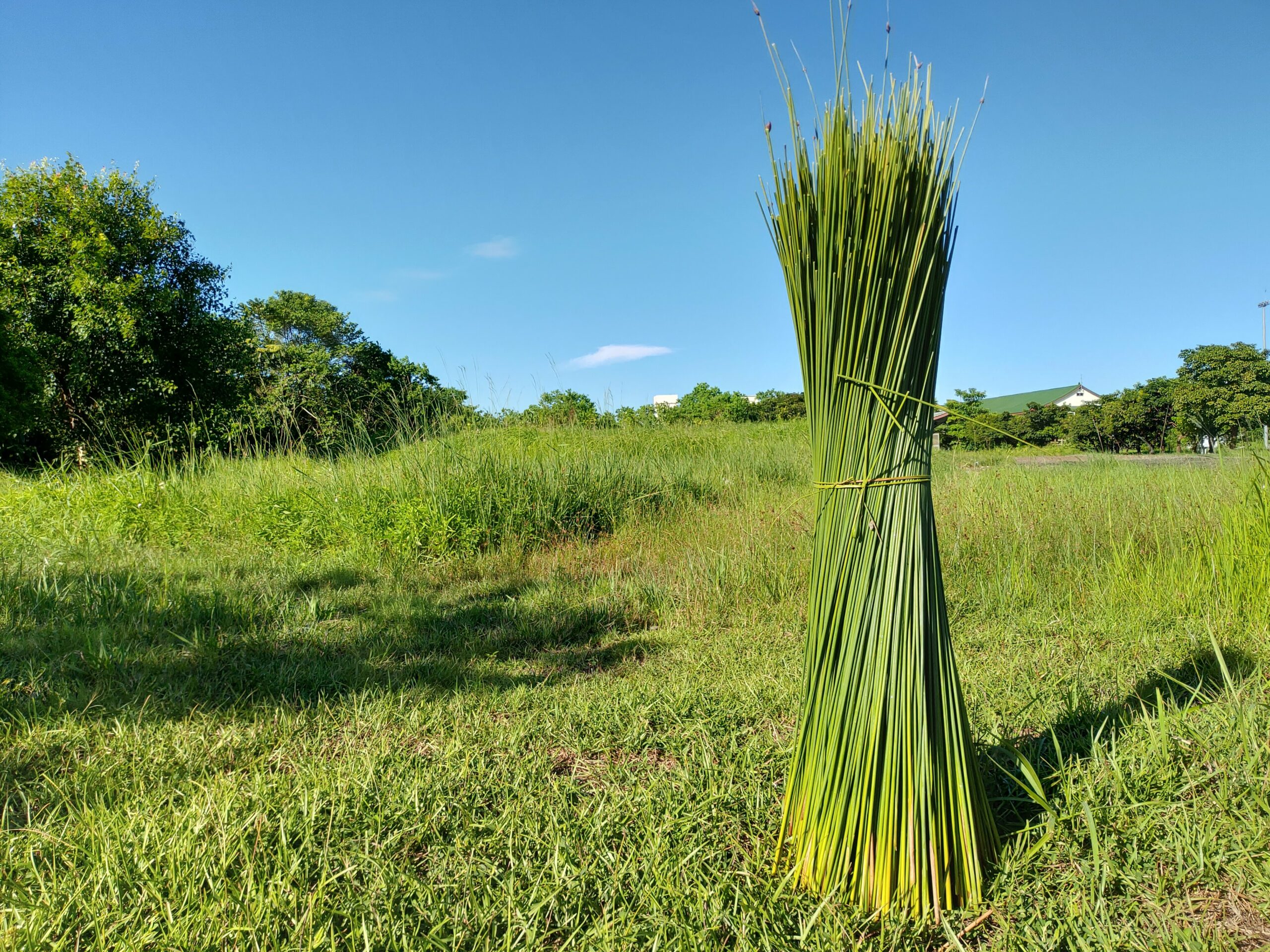
蒲草吸管是用一種叫做 蒲草(Lepironia Articulata) 的植物,直接裁切、烘乾後做成的。蒲草本身具有天然的中空結構與堅韌纖維,因此天生就長得像吸管,不需要加工,也沒有任何添加物。保留了植物原本的顏色、紋路和粗細,所以每一支都是獨一無二的存在。
其實蒲草以前常拿來做榻榻米,如今變成更環保的日常選擇。
蒲草吸管從採收到成品,全程使用天然工法,不添加任何化學藥劑。製作流程包含:
1.清洗淤泥:去除泥沙與雜質
2.裁切成吸管長度:依飲料店常用尺寸製作
3.去除外膜:提升潔淨度與使用手感
4.烘乾脫水:確保耐用度並避免發霉
5.紫外線+臭氧雙重消毒:達到食品級安全
這樣的製程讓蒲草吸管保持自然原始的狀態,沒有塑膠、沒有加工物質,也因此每根吸管的紋路、顏色都略有不同,是天然產品的特色。