Don’t be fooled by the word “Biodegradable”. Biodegradable plastics” may seem like a savior for the planet. From packaging, utensils, to straws, nearly every brand emphasizes “we use biodegradable materials,” with the most commonly used being PBS straws (biodegradable straws, plant fiber straws)。但真相是,能分解不代表會完全消失. PBS requires specific natural conditions to be broken down by microbes. If unmet, it won’t fully disappear and may fragment into microplastics, re-entering ecosystems and potentially impacting human health.
Let’s explore 3 environmental truths about PBS based on scientific research.
Truth 1: PBS degradation requires “ideal” conditions
To fully break down PBS, all 4 of the following conditions must be met simultaneously:
- There must be specific microorganisms capable of degrading PBS
- Stable humidity and moisture
- A temperature of about 30–60°C
- Sufficient time and oxygen
If any one of these factors is missing, the degradation process nearly comes to a halt. Research indicates that when placed in natural soil about 12 months. PBS samples still fail to fully degrade, showing only surface erosion [Reference 1].
🔎In reality, PBS may take years to fully degrade.
Truth 2: Incomplete degradation creates microplastics
Even in moist environments, PBS doesn’t immediately convert to CO₂ and water. It often breaks down into tiny fragments first— essentially forming microplastics.
📖 Research-backed:
- Polymers (2024), a journal study found that PBS–PLA blended films can generate
bio-microplastics [Reference 2]. - Another study indicates that PBS releases measurable particles during degradation, posing a risk of environmental accumulation [Reference 3].
🔎 This means that even if labeled “biodegradable,” PBS straws can still persist in the environment in a finer form.
Invisible Microplastic Pollution
Although invisible to the naked eye, these microplastics can adsorb heavy metals and organic pollutants. Once they enter rivers, they are mistaken for food by plankton, consumed by fish and shrimp, and eventually make their way into the human food chain.
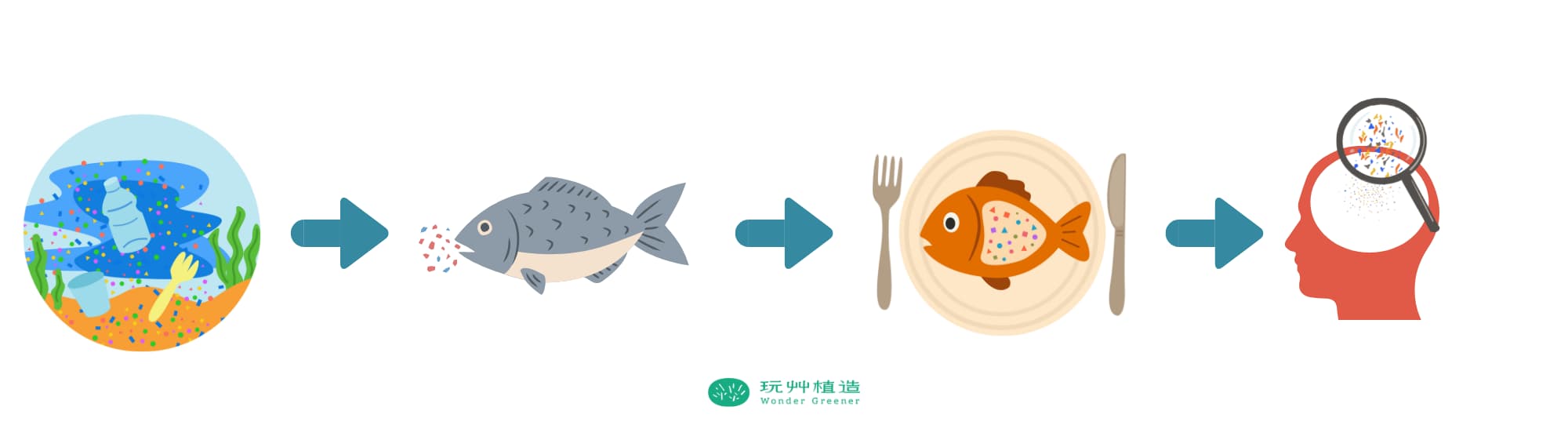
According to Science of the Total Environment (2023) studies have detected PBS-type microplastic residues in seafood samples. This means that even if the material is “biodegradable,” as long as it doesn’t fully break down, it can still enter the global microplastic cycle.
🔎 In other words, the “end point” of PBS straws may not be a composting facility—but your dining table.
Truth 3 : Only a few microbes can truly “digest” PBS.
Scientists have confirmed that only specific strains can effectively break down PBS.
For example, Bacillus bacteria under controlled microbial conditions, can achieve a PBS degradation rate of up to 76.5%. [Reference 4]
However, these microbes are extremely rare in nature. Without these “high-efficiency degraders,” PBS barely breaks down and ultimately fragments into tiny pieces, persisting in the environment.
Current Research Status: Significant Data Gaps Remain
Multiple studies indicate that PBS’s real-world behavior in open environments remains under investigation.
- Journal of Cleaner Production(2024) reviews note that PBS degradation rates and microplastic release data in soil, landfill, and aquatic environments remain highly incomplete [Reference 5].
- RSC Sustainability(2025) research shows that PBS degrades very slowly in seawater, with thicker and more crystalline samples being even harder to break down [Reference 6].
📌 The key point is: Passing a “biodegradability test” doesn’t mean it will break down in nature; it only indicates potential decomposition under ideal conditions.
Genuine sustainability: Not plastic fragmentation, but a full return to the earth
While "plant-based plastic" still relies on chemical polymerization, industrial energy, and specific decomposition conditions, Grass Straw demonstrates another possibility.
- Pure Plant Power. Zero Polymers: Directly from the reed stem, the Grass Straw is naturally free of PBS, PLA, PHA, and other polyester chemicals, eliminating artificial polymerization and intensive production.
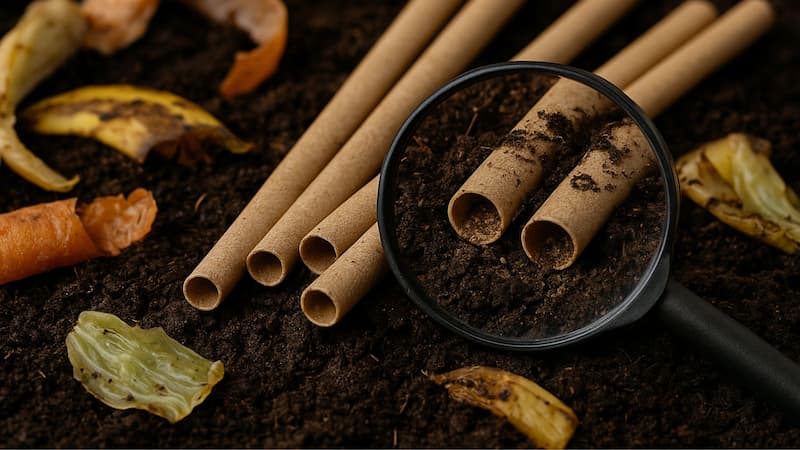
- Fully compostable in natural settings: Unlike PBS which demands composting conditions, the Grass Straw self-decomposes in natural soil and water, returning fully to the carbon and water cycle. It is, simply put, a fallen leaf.
- Low-Carbon Process, Earth-Friendly: Derived from renewable aquatic reeds, the simple process (washing→ cutting→ hollowing→ drying→ sterilization) achieves a significantly lower carbon footprint than chemical plastics. Crucially, the cultivation wetlands themselves possess inherent carbon sequestration capabilities.
📌The philosophy behind the Grass Straw transcends mere "replacement".
It is a commitment to "reversion"—allowing Nature to resume its intended cycle.
How should consumers and brands make choice?
In a market saturated with "biodegradable" labels:
- Check the ingredients, know the material: When you see terms like “PBS” or “PLA,” you can look them up online.
- nquire about the Required Decomposition Conditions: If it requires industrial composting, it's not truly naturally degradable.
- Support Nature Solution: Purely botanical products, such as the Grass Straw, are the genuine sustainable choice that can truly revert to the land.
True sustainability doesn't rely on chemical reactions
PBS reveals "Biodegradable" is not endpoint, but merely another form of delayed pollution.
而蒲草吸管則提醒我們:
真正的永續,不需要仰賴科技模仿自然,而是let Nature Speak for Itself.
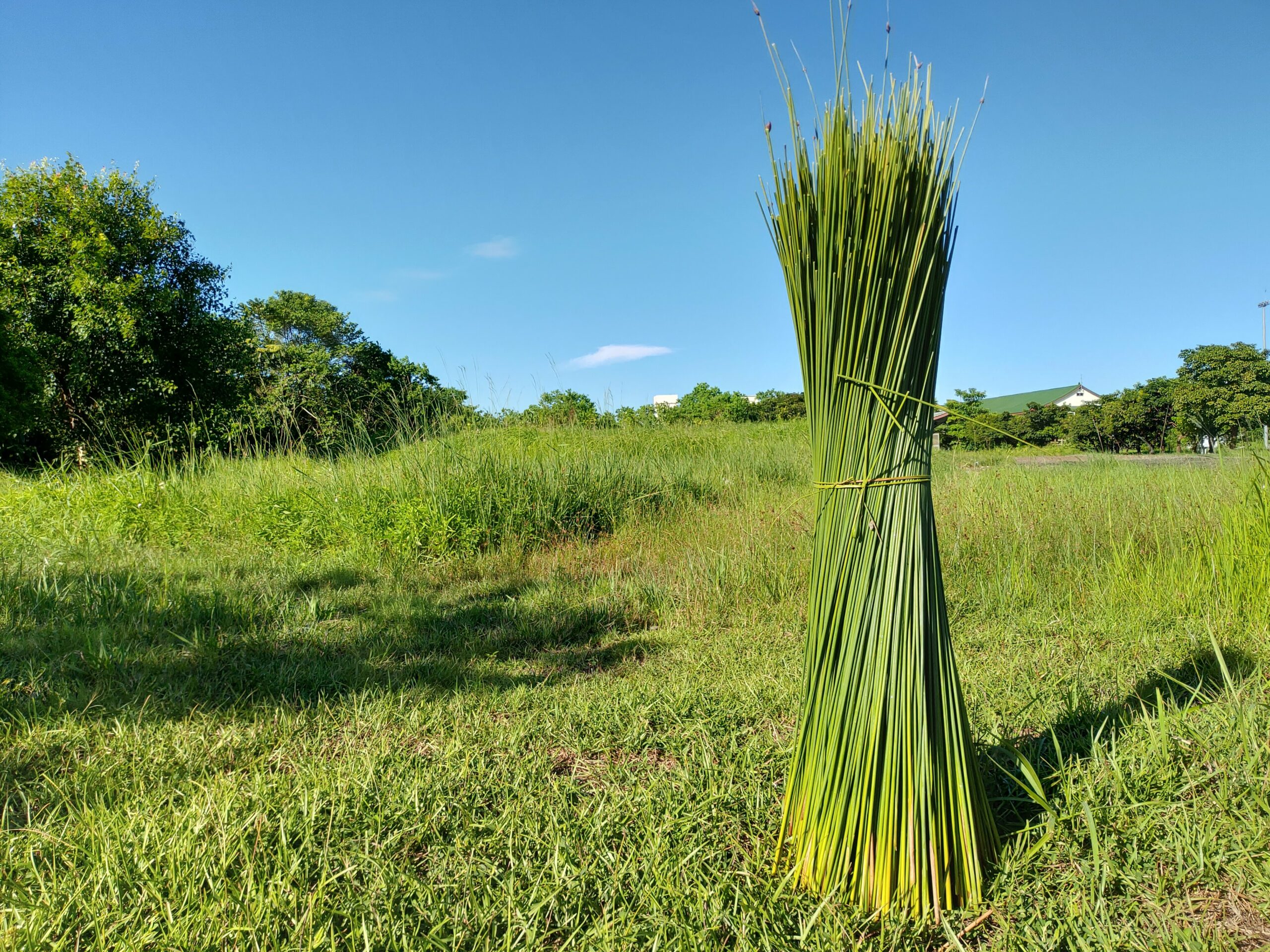
蒲草吸管是用一種叫做 蒲草(Lepironia Articulata) 的植物,直接裁切、烘乾後做成的。蒲草本身具有天然的中空結構與堅韌纖維,因此天生就長得像吸管,不需要加工,也沒有任何添加物。保留了植物原本的顏色、紋路和粗細,所以每一支都是獨一無二的存在。
其實蒲草以前常拿來做榻榻米,如今變成更環保的日常選擇。
蒲草吸管從採收到成品,全程使用天然工法,不添加任何化學藥劑。製作流程包含:
1.清洗淤泥:去除泥沙與雜質
2.裁切成吸管長度:依飲料店常用尺寸製作
3.去除外膜:提升潔淨度與使用手感
4.烘乾脫水:確保耐用度並避免發霉
5.紫外線+臭氧雙重消毒:達到食品級安全
這樣的製程讓蒲草吸管保持自然原始的狀態,沒有塑膠、沒有加工物質,也因此每根吸管的紋路、顏色都略有不同,是天然產品的特色。
Grass straw是由天然植物(蒲草)直接裁切、烘乾後製成,不含塑膠、無化學添加,使用後能在自然環境中分解。
biodegradable straws(例如 PLA、PBS、植物纖維吸管)多半是以生物塑膠或部分植物澱粉再加工製成,需要特定的工業堆肥環境才能分解,在自然環境中通常不會真正消失。
植物吸管通常指由「整株植物」直接做成的吸管,例如:蒲草吸管、小麥吸管、竹吸管、蘆葦吸管。
植物纖維吸管則是將「植物纖維打成粉、加入生物塑膠(PBS、PLA 等)」再製成吸管,本質上仍是塑膠製品,例如:甘蔗渣吸管、咖啡渣吸管、茶葉渣吸管、玉米渣吸管。
📚 參考資料
- Degradation of bio-based film plastics in soil under natural conditions, Science of the Total Environment (2023)
- Generation of Microplastics from Biodegradable Packaging Films Based on PLA, PBS and Their Blend in Freshwater and Seawater, Polymers (2024)
- Investigation of biodegradable microparticle release and environmental accumulation in Poly (butylene succinate) degradation, Environmental Technology & Innovation (2025)
- Reproducible Polybutylene Succinate (PBS)-Degrading Artificial Consortia, Polymers (2024)
- Degradation of biodegradable plastics in waste management systems and the open environment: A critical review, Journal of Cleaner Production (2024)
- Marine biodegradation of poly(butylene succinate): mechanisms and influencing factors, RSC Sustainability (2025)