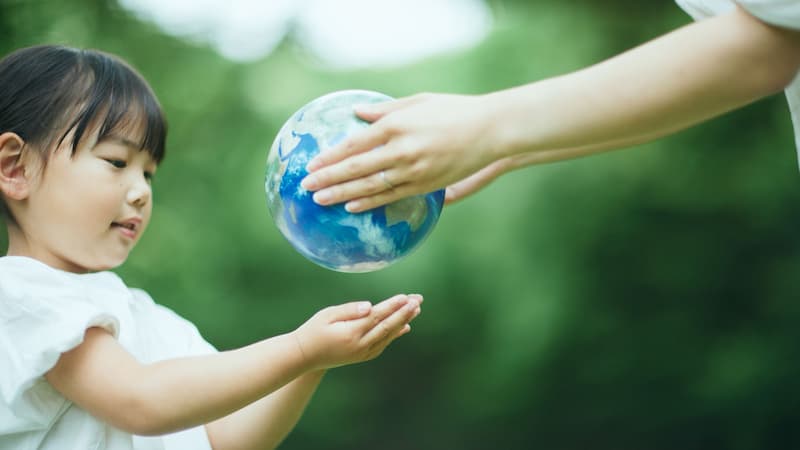
The word "eco-friendly" seems distant and abstract to children. As parents, we all hope to leave a better planet for our children, but how can we inspire them in daily life rather than through slogans or preaching? In fact, eco-education doesn't have to wait until they grow up. It is a journey that starts at home, where, through parental guidance, children can fall in love with eco-consciousness through small observations, heartwarming stories, and fun hands-on activities. Below, we will share 4 specific and feasible parent-child education tips, allowing you and your children to become little green pioneers together!
1. Inspire Curiosity by Observing Everyday Items
Eco-education is never a difficult theory, but an awareness that starts with what is around us. You can turn an everyday item into a starting point for inspiring a child's thinking.
- Start with Asking: The next time your child picks up a straw, a plastic bottle, or a plastic bag, you can try asking them : "What do you think this item is made of?
" Where does it go after we use it? " - Explore Materials and Lifecycle: Take your child to observe the recycling labels on items and understand the characteristics of different materials. When they start thinking about an item's journey from its creation to being discarded, they will naturally develop a different perspective on "trash."
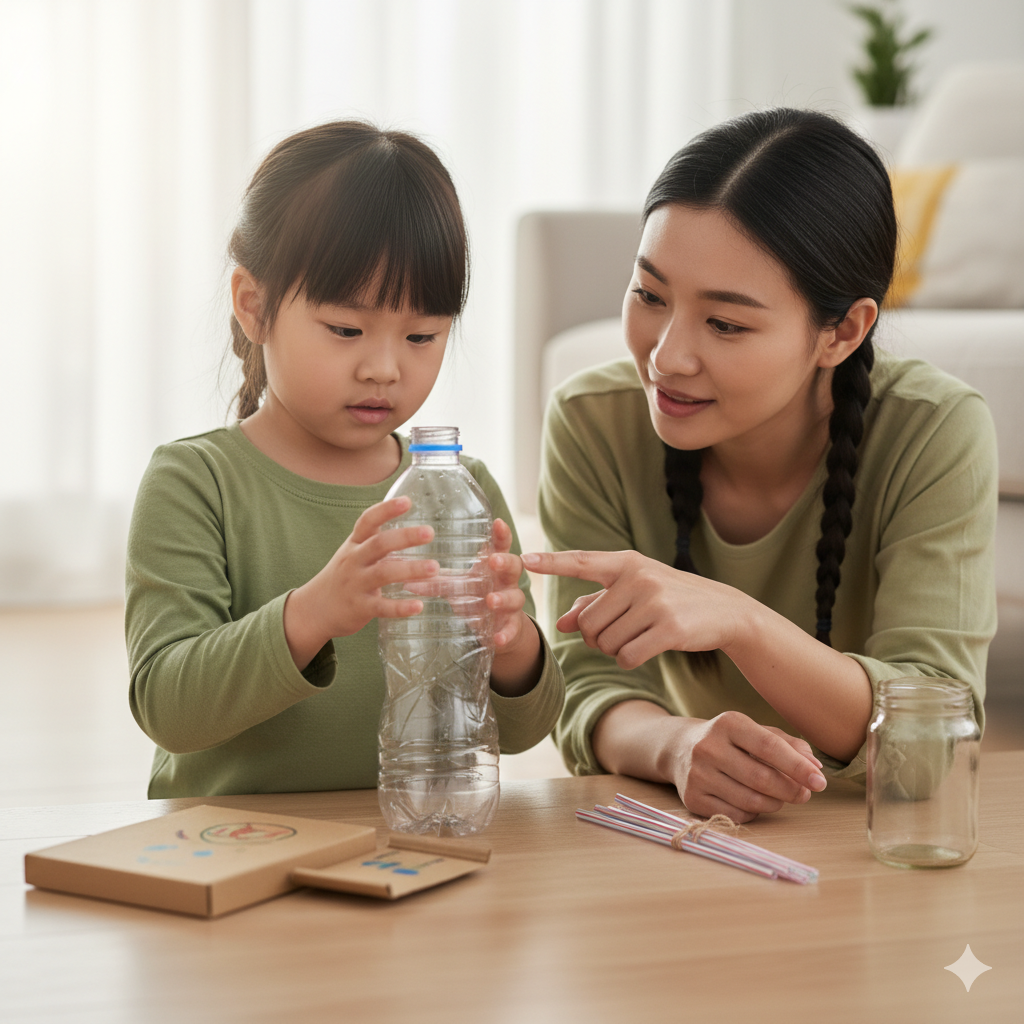
Through such simple questioning and guidance, we can help children establish a preliminary understanding of an item's lifecycle and initiate the first parent-child lesson on sustainability.
2. Storytelling: Cultivate Empathy and Connection
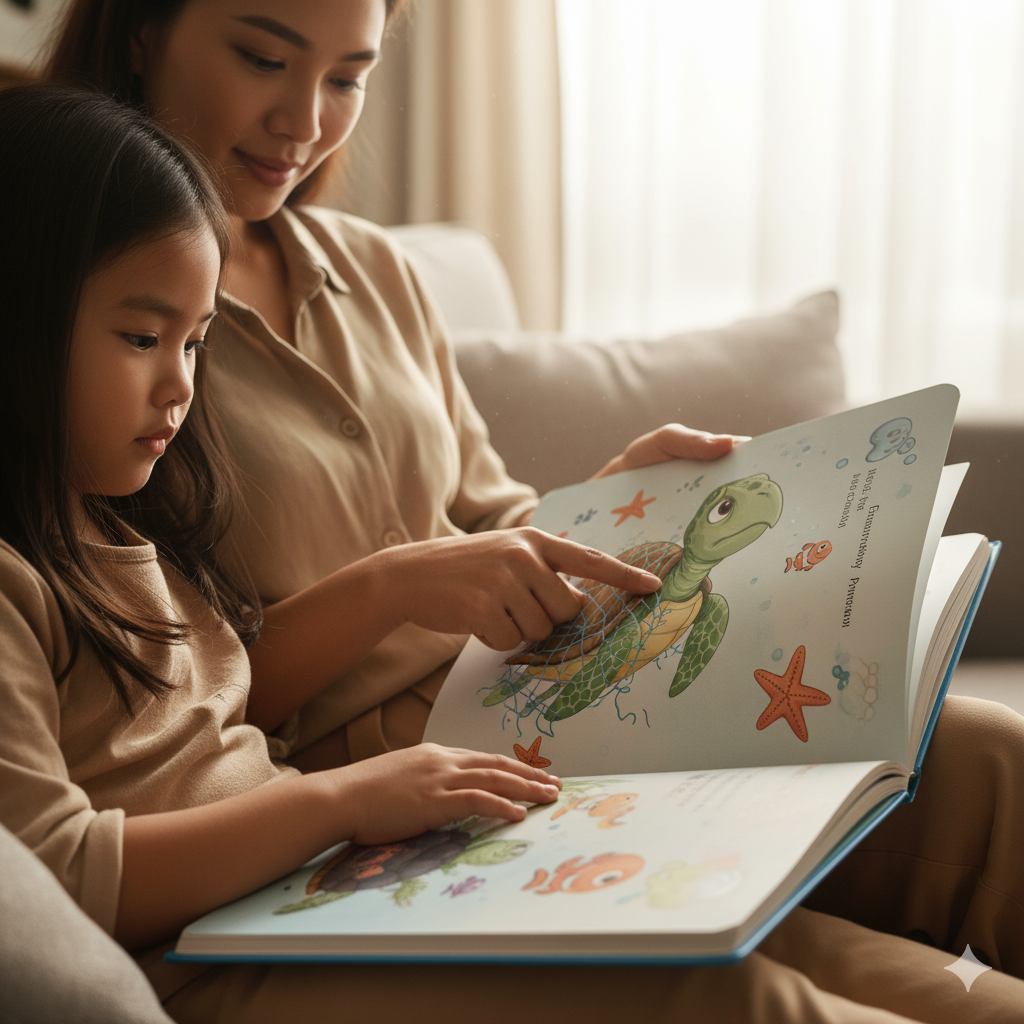
For children, emotional connection is more powerful than any preaching. Use vivid and interesting eco-friendly picture books or stories to help them understand the meaning of eco-friendliness more profoundly.
- Select Themes: Select topics related to ocean conservationand animal welfare or sustainable living related picture books. When children learn from the stories that sea turtles are injured because of plastic straws or that seabirds mistakenly eat plastic trash, they will more easily develop empathy.
- Extended Discussion: After the story, you can discuss with your child : "What can we do to help these animals ?" This action can make eco-friendliness no longer a distant issue, but a warm action closely related to life.
3. Hands-On Activities Make Eco-Learning Fun
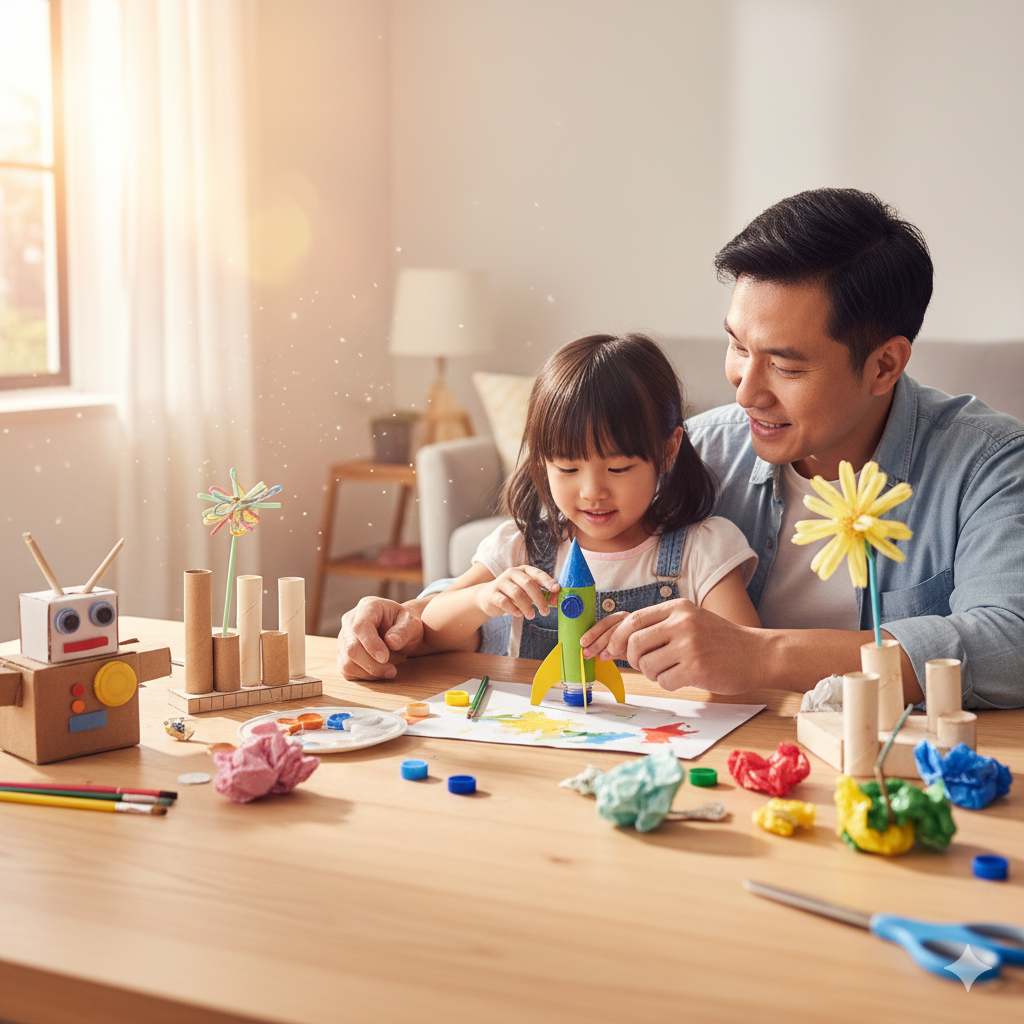
Let children integrate eco-friendliness into their play and creative activities is the best educational method.
- Upcycling Projects: You can work with your child to transform waste like old straws, plastic bottles, and paper boxes into interesting art pieces or practical items through skillful hands. This not only cultivates the child's creativity but also lets them personally experience the fun of "trash turning into gold."
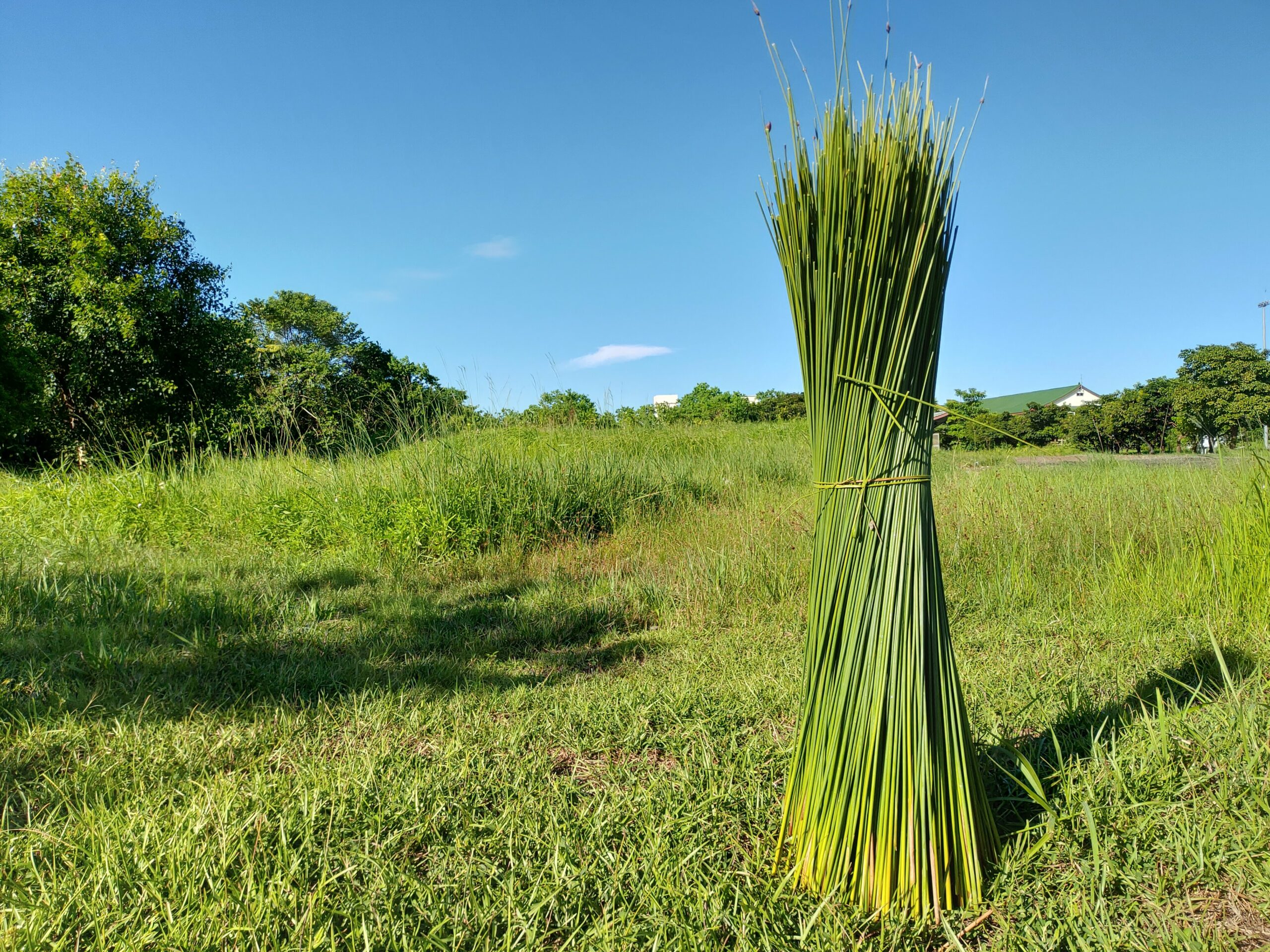
- Exploration of Natural Materials: Alternatively, you can choose to use materials like Grass straw, allowing children to feel the uniqueness of the material during the creation process and learn to cherish resources. This kind of hands-on experience can make eco-friendliness fun and deepen their learning impression.
4. Visit Education Venues to Expand Sustainability
As the saying goes, "Seeing is believing." Breaking out of the home framework and personally experiencing environmental issues is far more impactful than written promotion. You can refer to popular national parent-child environmental education venues, and take the children on a fun and educational weekend journey:
- New Taipei City Sustainable Environment Education Center:
This green building itself serves as the best teaching material. The center features interactive facilities, such as cycling to generate electricity, which allows children to easily understand the connection between energy and sustainability. - Taichung City Wenshan Recycling and Environmental Education Park:
Here, children can learn how trash is processed, recycled, and reused, effectively translating environmental knowledge from concept into practical daily life. - National Science & Technology Museum, National Museum of Natural Science:
Through hands-on operations and challenge games in thematic exhibition areas like "Sustainable Home", children are guided to think about how to respond to environmental changes, thereby cultivating their problem-solving skills. - New Taipei Shimen Wind Power Station (Windmill Park):
Located on the North Coast, this is the first commercially operated wind turbine on Taiwan's main island. It features viewing wooden boardwalks, allowing visitors to view the windmills up close and feel the awe of wind power generation.
These experiences can inspire children’s environmental responsibility and spark their imagination about sustainability.
Starting with "Love," Cultivate a Sustainable Future
Eco-education isn’t meant to pressure children, but to begin with “love.”
Love for family, for Earth, and all life.
Through these four clever tips, we can accompany our children to gain awareness from daily life, learn from stories, find joy through hands-on activities, and expand their horizons through the outdoors. Every moment of parent-child time is a golden opportunity to cultivate little green pioneers. Let us start today, together with our children, moving toward a more sustainable future.
Start with a Straw,
Plant the Seed of a Sustainable Future!
Sustainability starts now, in small daily choices.
Want your child to experience "taking from nature and giving back to nature? "
Choose natural, biodegradable grass straws.
Together, do your part for the Earth.