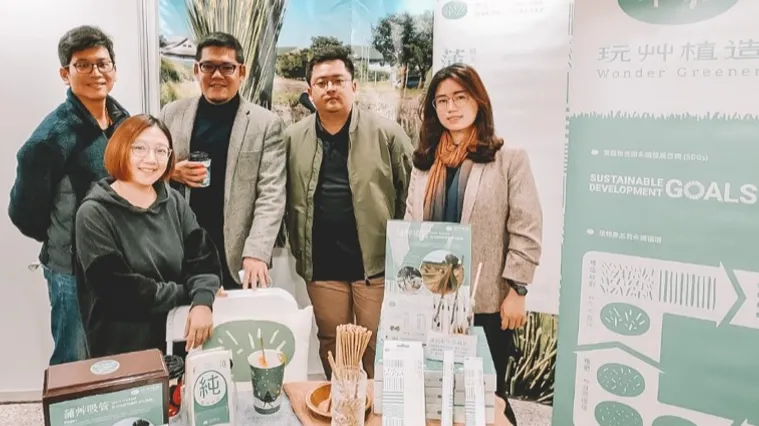
Hi, we are Wonder Greener. Today, we want to share some good news that we've been keeping close to our hearts for a long time. This time, our pride comes from more than just a single straw! We can finally share the real data with everyone. Remember how we initially told everyone how eco-friendly Grass strawis? We said it was natural, naturally degradable, and better than plastic straws. But honestly, because the world of eco-friendliness is too complex—too many traps of "Fake sustainability" that we were afraid of being misunderstood, afraid of being questioned. We knew that simply saying “very eco-friendly” wasn’t enough.
So, we decided to dig deep into the true story behind grass straws. From cultivation to natural decomposition, every step was mapped and scrutinized. Over these days, we’ve followed third-party verification body, we reviewed every carbon and biodiversity report. The journey was tougher than we imagined, and at times we wondered if it was worth it.
Yet when the data finally arrived, it made everything worthwhile.
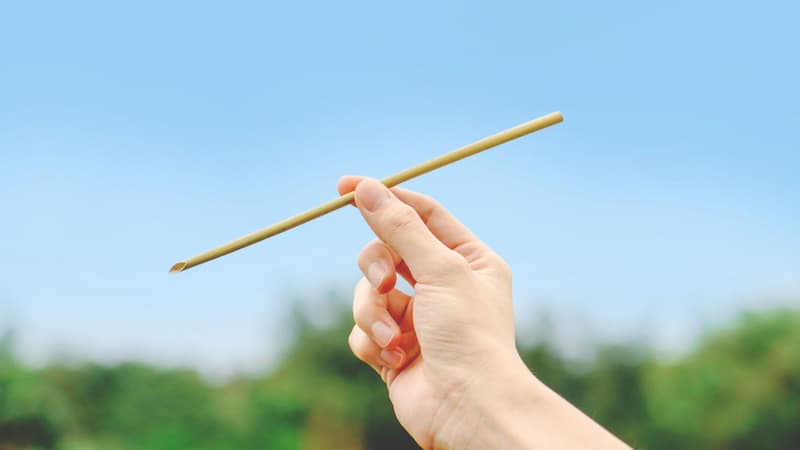
Our grass straws are truly "carbon negative"!
Remember we said that grass absorbs CO₂ as it grows—and now we can measure it. From nature to your hands, every step of this carbon-negative journey is accounted for.
Station 1: Grass Fields at Work — Capturing Carbon Naturally
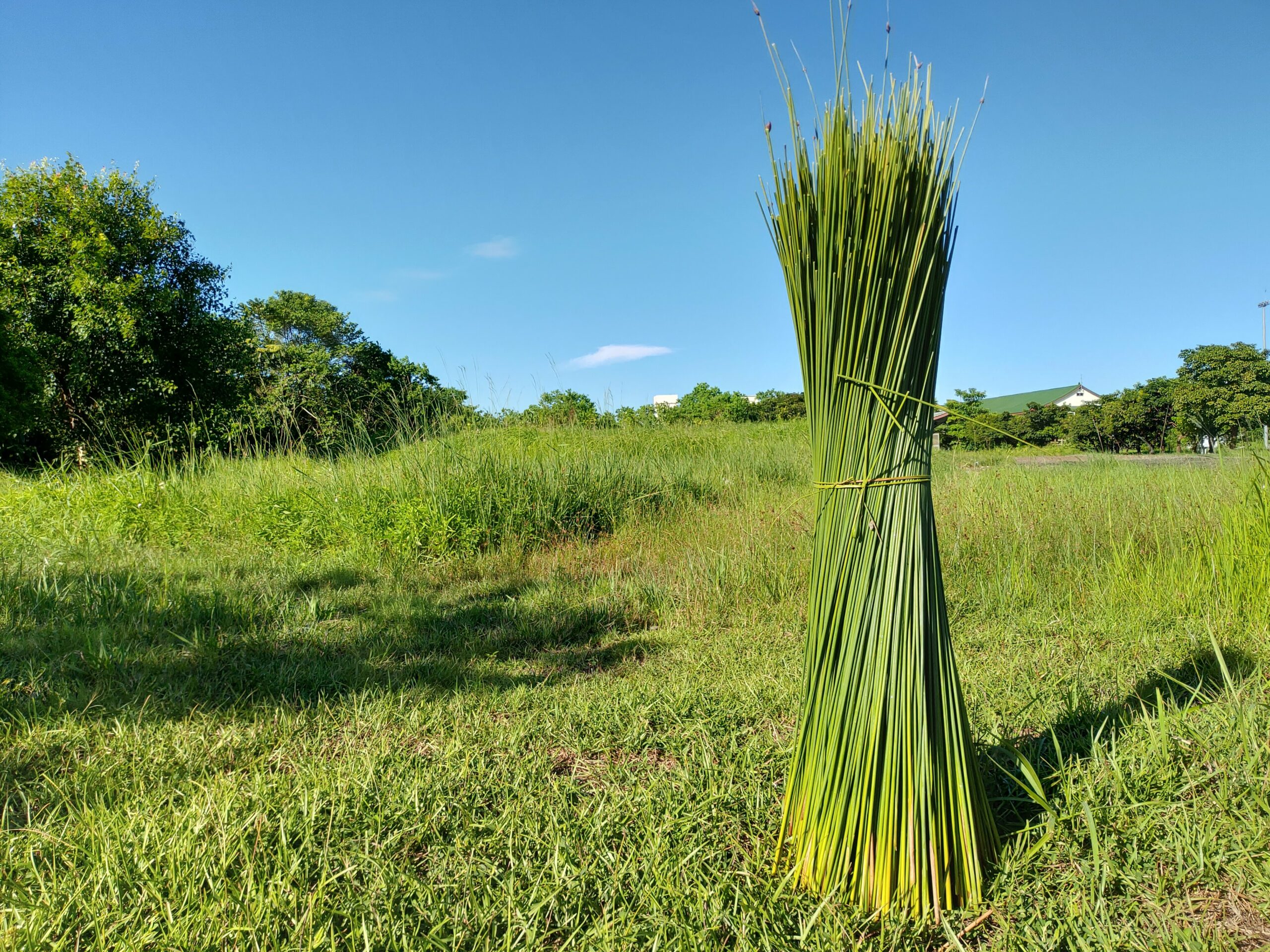
Our journey starts in a vibrant grass meadow. Since grass can be harvested without plowing, our farms do more than produce, they act as nature’s carbon-capturing wizards. According to Gold Standard method (Under verification), A single hectare of grass can capture as much as 400 tons of CO₂. You might not have a sense of this number, in other words, each grass straw can capture an estimated 20g of CO₂ as it grows! This means our sustainable straws start contributing to the planet from the moment they’re planted — not just reducing emissions, but actively sequestering carbon.
From farm to your hands: a carbon-negative journey
Curious how a grass straw travels from the field to your hands? Our Production process is simpler than you might think— no complex chemistry or energy-intensive processes— just a simple transformation of nature’s gift into an eco-friendly product.
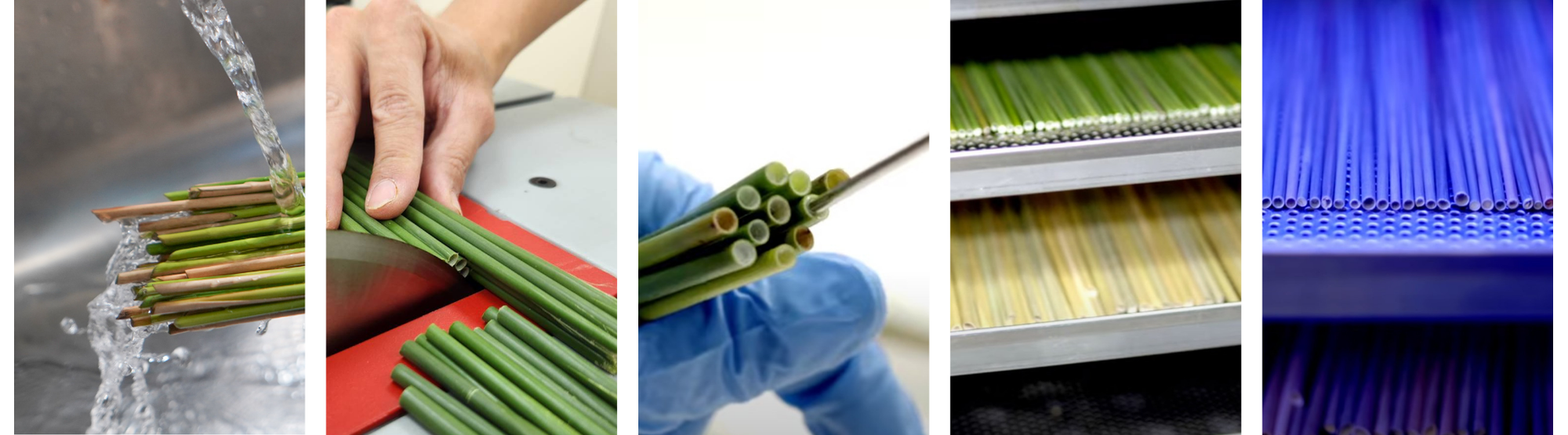
This process, total carbon emissions only 4.412g, every step stands up to scrutiny:
- Materials and process (2.3263g) : Once harvested, our grass is carefully washing, trimming, hollowing, drying, and sterilization. Emissions mainly come from equipment and power, but energy use is still far lower than traditional plastic straws.
- Packaging and delivery (1.9723g) : From packaging to delivery, we work to minimize our carbon footprint at every step.
- Sales and disposal (0.1135g) : This stage covers carbon emissions from sales to consumer use, including the final disposal of packaging.
A simple calculation reveals the amazing value of grass straws:
4.412g (Production carbon emissions) – 20g (Plant carbon sequestration) = -15.588g.
This means that even including emissions from production, the straw’s life-cycle carbon footprint remains negative. It not only offsets its own emissions but also returns 15.6g of carbon credits to the planet. That’s why we proudly call it a fully guilt-free, disposable straw from start to finish.
Beyond carbon, we’ve achieved even more
But that’s not what makes us proud—our journey goes beyond the numbers.
Promise 1: From leaf to soil, free of microplastics
Where does your eco-friendly straw go after use? Our grass straws can be fully biodegradable in natural environments. Unlike bioplastics that require industrial composting and may still turn into microplastics, this straw can be thrown into your food waste bin or buried in a plant pot. It naturally decomposes, returning to the earth — because it is a plant. That’s true zero waste.
Promise 2: Reviving nature, boosting biodiversity
Our grass farms aren’t just for cutting carbon. They’re thriving, living ecosystems.
You may not know, but our biodiversity report commissioned from National Sun Yat-sen University shows that Aquatic insects in our grass fields are far more than in conventional rice fields! This means our cultivation not only avoids harming the environment but also creates a better habitat for small creatures.

Promise 3: Backing local farmers, boosting rural regeneration
We’ve also achieved social well-being. By growing grass, our farmers enjoy extra income, and our partnerships provide more than employment — they offer a path to revitalizing rural economies. From carbon to biodiversity, and from carbon reduction to social well-being isn’t for us to claim — it’s clearly documented in our reports.
Sincere words from Wonder Greener
Today, we can finally say with confidence: Every bit of your support is part of a genuine sustainability effort.
We know that the market is full of eco-friendly utensils, and it can feel exhausting.
Grass straws are different. They’re not just a straw — they embody a choice that considers convenience, the planet, and society. Thank you for believing in us.
Our grass straw is truly a guilt-free, disposable straw from beginning to end.
Let the numbers tell the story and feel truly guilt-free
We’ve used quantifiable data to prove this sustainability commitment from nature.
Now, we invite you to experience this straw, truly guilt-free from farm to your hands.
Take action with us — let every purchase leave a lasting, positive mark on the Earth.
蒲草吸管從採收到成品,全程使用天然工法,不添加任何化學藥劑。製作流程包含:
1.清洗淤泥:去除泥沙與雜質
2.裁切成吸管長度:依飲料店常用尺寸製作
3.去除外膜:提升潔淨度與使用手感
4.烘乾脫水:確保耐用度並避免發霉
5.紫外線+臭氧雙重消毒:達到食品級安全
這樣的製程讓蒲草吸管保持自然原始的狀態,沒有塑膠、沒有加工物質,也因此每根吸管的紋路、顏色都略有不同,是天然產品的特色。
紙吸管:原料來源不明、製造過程更耗能、黏著劑/防水塗層可能會溶解,且無法回收。
PLA吸管:在自然環境無法被分解,只能在「工業環境高溫高濕度下」分解,現有回收體系無法處理。
指的是企業或品牌,透過「誇大、模糊或不實」的行銷手法,讓消費者誤以為其產品或服務對環境非常友善,但實際上對環境的效益卻微乎其微,甚至根本沒有。