面對日益嚴格的永續規範與消費者期待,您的企業是否正在尋找高效、且能實際貢獻於永續目標的解決方案?答案,或許就在您手中那根小小的蒲草吸管裡。在這個全球企業都在爭相發布永續承諾的時代,單純的口號已經無法滿足市場與投資者的要求。真正的企業社會責任(ESG),需要有「可量化數據」的支持,並能經得起公眾的檢視.
Chapter I. The Critical Bottlenecks of Carbon Footprint Measurement
Today's enterprises are currently under immense pressure regarding Carbon Accounting and ESG benefits. Specifically, the complex Scope 3—carbon emissions, which include indirect emissions from the supply chain and consumers, often represent the most challenging component for businesses to manage and accurately track. According to the latest global carbon inventory standards, all emissions from a product—from manufacturing to disposal—must be included in the calculation. "Conventional plastic straws" represent one of the unavoidable sources of single-use emissions that heavily impact a company's Scope 3. Amidst numerous sustainability initiatives, how can one identify a cost-effective solution that provides quantifiable data —has become the immediate priority for enterprises. Many companies invest heavily in renewable energy or equipment upgrades, yet often overlook the sustainable value generated by optimizing small details at the end of their supply chain.
Chapter II. Decoding the Carbon-Negative Equation of Natural Grass Straws
Grass straw is more than just a substitute for plastic; it is an investment that after third-party verification, can generate carbon-negative assets for your enterprise. Let's use the Life Cycle Assessment (LCA) perspective to show you the complete carbon footprint of the grass straw, from the cultivation process to natural decomposition. This data is authentic, transparent, and suitable for direct citation in your Sustainability Reports.
A Carbon-Negative Journey: From Field to Your Hand
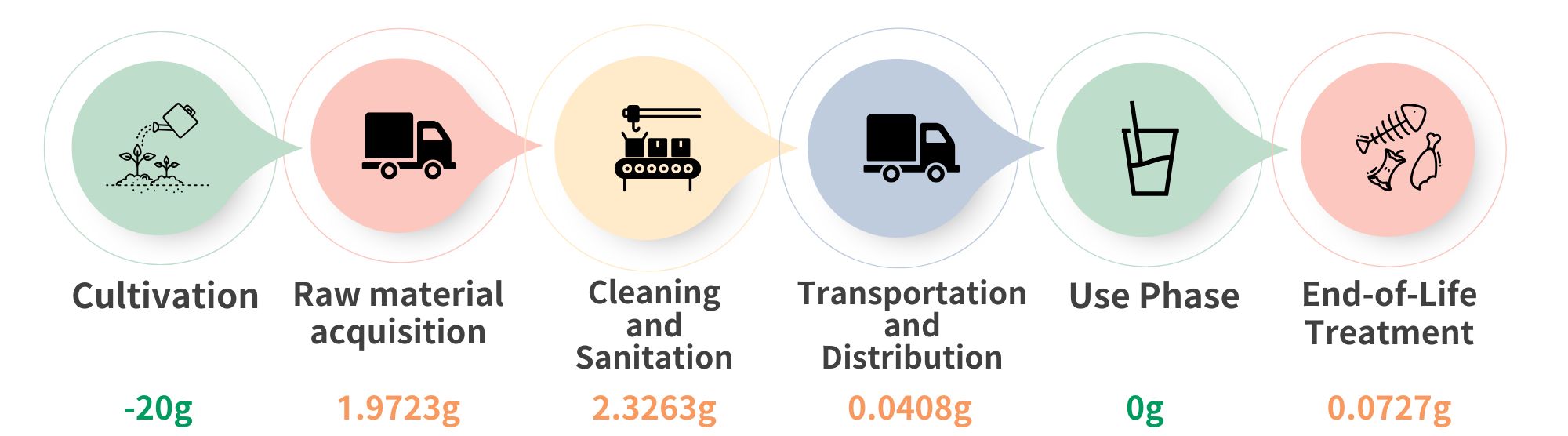
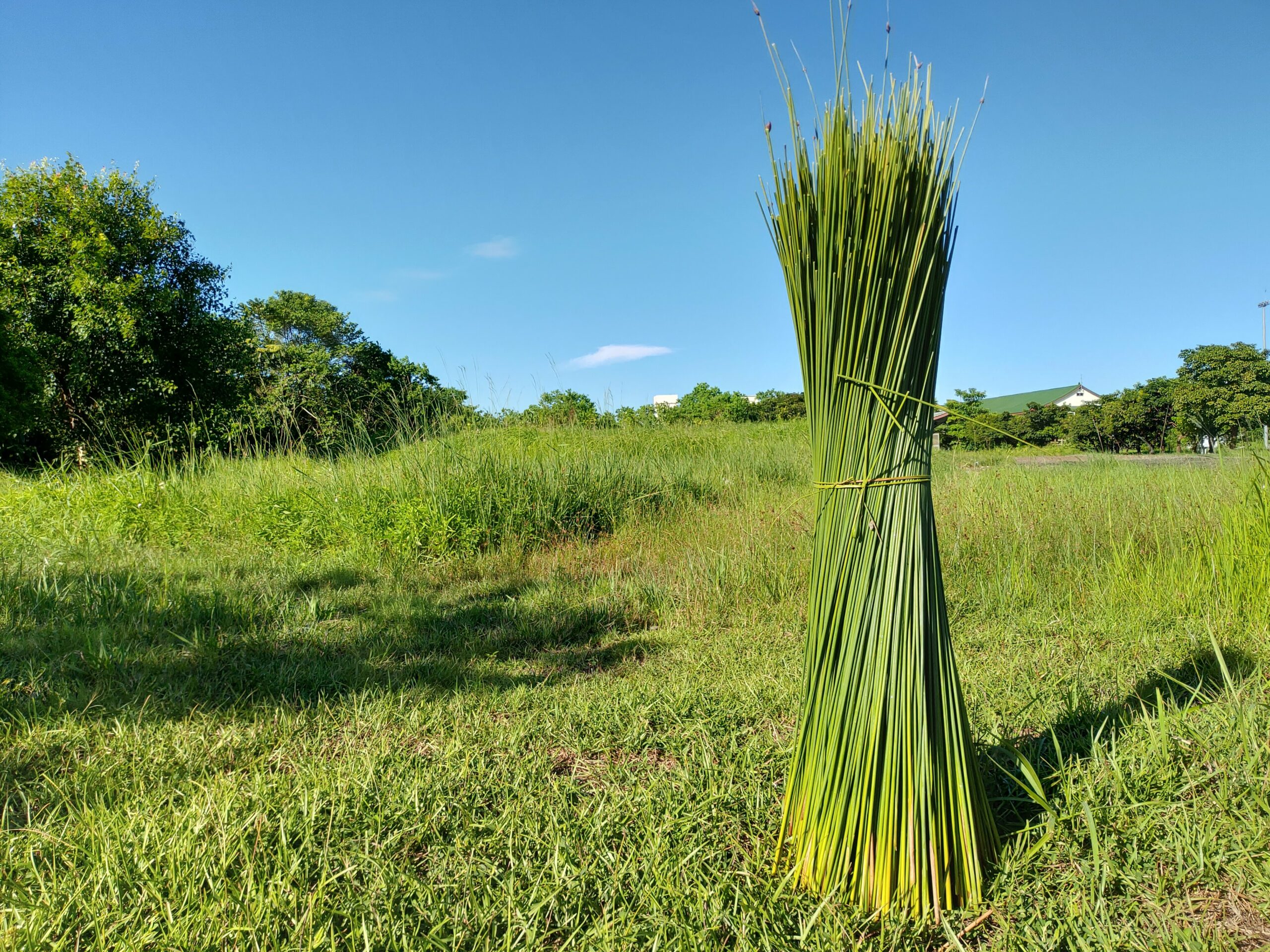
- Cultivation Stage: The grass straw effectively performs "carbon sequestration" during its growth process. Based on verification via the Gold Standard methodology,each hectare of grass field can absorb up to 400 metric tons of carbon dioxide. And one grass stalk can typically produce 2 to 3 individual straws, one grass stalk can typically produce 2 to 3 individual straws. This data shows our product benefits the planet from the start—not just cutting carbon, but truly sequestering it.
- Materials and process The manufacturing process for grass straws is extremely streamlined and low-energy-consuming, with the total carbon emissions only 4.412g. This includes the acquisition of raw materials(1.9723g), cleaning, and sterilization(2.3263g) and distribution and sales(0.0408g). We utilize no complex chemical reactions, nor do we require high-energy-consuming production lines; everything is designed to return to nature as much as possible.
- Usage and Decomposition: During the usage stage, our eco-friendly straws boast zero carbon emissions (0g). After use, they can fully decompose in the natural environment, and the carbon emissions of disposal of waste packaging materials only 0.0727g. Unlike biodegradable plastics that require specialized industrial composting environments, the grass straw achieves true natural decomposition, fundamentally preventing the generation of microplastics and fulfilling the commitment to zero waste.
A simple calculation reveals the amazing value of grass straws:
4.412g (Production carbon emissions) – 20g (Plant carbon sequestration) = -15.588g
This signifies that every grass straw used by your enterprise is not just "low-carbon" or "carbon-neutral"; it substantially and practically offsets the company's overall carbon footprint, making a net positive contribution to the planet. This quantifiable data serves as your most compelling evidence in your annual ESG report.
Chapter III. Beyond Carbon Reduction—
A Comprehensive Sustainability Investment
The value of the grass straw extends far beyond simple carbon emissions calculations; it is a critical asset for fulfilling your Corporate Social Responsibility (ESG) commitments and enhancing your Sustainability Reports. This small change can deliver three major sustainability benefits for your enterprise:
1. Enhancing Biodiversity and Environmental Education
Our grass fields function much like a miniature wetland ecosystem, providing a healthy habitat for local flora and fauna. In our grass fields, the variety and quantity of aquatic insects are greater than in traditional rice paddies. This proves that our cultivation process has not only avoided environmental damage but actively contributes to biodiversity, providing a healthy habitat for the local ecosystem. This achievement can also be proudly included in your biodiversity report and serves as an excellent educational resource for environmental awareness.
2. Rural Regeneration and Social Well-being
We collaborate with local farmers, creating an additional income source through fair pricing. This not only supports local agriculture but also injects new vitality into rural areas, fulfilling the spirit of social well-being. Through this collaboration, your enterprise also indirectly contributes to rural revitalization and the United Nations Sustainable Development Goals (SDGs), specifically SDG 11(Sustainable Cities and Communities) and SDG 15(Life on Land), making real contributions.
3. Building Brand Sustainability Image and Green Marketing
This change will deeply resonate with sustainability-conscious customers, especially the younger generation of consumers. It is not just an environmental action; it is a symbol of corporate sustainability reporting and innovation, capable of effectively enhancing your brand reputation and market competitiveness, and creating excellent opportunities for green marketing. When consumers know that the product they purchase is making a substantive, positive impact on the planet, this level of trust and loyalty will far exceed any traditional marketing campaign.
Start Your Sustainability Commitment with One Straw
Sustainability is no longer just a slogan; it is something that can start with a small, feasible change, creating massive, concrete environmental benefits. Choosing Grass strawmeans you are selecting more than just a product; you are choosing a quantifiable, communicable, and proudly reportable sustainability asset for your ESG report.
Now, let your eco-friendly straw contribute to the climate.

Strategic Sustainability Planning Starts Here
Stop worrying about complicated carbon accounting.
Grass straws are a cost-effective sustainability solution with immediate, measurable results.
A simple switch can offset your enterprise’s carbon footprint—making sustainability easy.
蒲草吸管是用一種叫做 蒲草(Lepironia Articulata) 的植物,直接裁切、烘乾後做成的。蒲草本身具有天然的中空結構與堅韌纖維,因此天生就長得像吸管,不需要加工,也沒有任何添加物。保留了植物原本的顏色、紋路和粗細,所以每一支都是獨一無二的存在。
其實蒲草以前常拿來做榻榻米,如今變成更環保的日常選擇。
蒲草吸管最大的不同在於:它是真正的天然植物本體,而不是加工製品。
因此在原料、製程、使用體驗與環境影響上,都和其他一次性吸管完全不同。
1.原料差異最大——天然 vs. 加工
- 蒲草吸管:整株蒲草的莖。
- 紙吸管:紙漿+黏著劑+防水劑。
- PLA / PBS 吸管:植物澱粉+塑膠原料再加工。
- 植物纖維吸管:植物粉+可分解塑膠混合而成。
- 塑膠吸管:石化塑膠。
2.製程加工程度不同——低加工 vs. 高加工
- Grass straws:
清洗 → 裁切 → 去膜 → 烘乾 → 消毒(全程無化學) - 其他吸管:
需要加熱、造粒、擠壓、成型、塗層等多道加工程序。