In recent years, we have all worked hard to respond to environmental protection initiatives, choosing various alternative straws. From paper straws and stainless steel straws to PLA straws which dubbed "biodegradable". There is truly a myriad of materials available. However, after using them for so long, you might start to wonder: "Are these eco-friendly straws truly environmentally sound?" Many consumers and food service operators, upon actual experience, have found that these plastic substitutes seem to fall short of expectations, even leading to a backlash.
Don't worry! Today, we will leverage feedback from thousands of catering businesses, explore the environmental sustainability truths of various straws and together debunk
5 major myths to find the genuinely most sustainable straw of 2026. Allow you to truly contribute to carbon reduction instead of falling into the trap of "fake environmentalism."
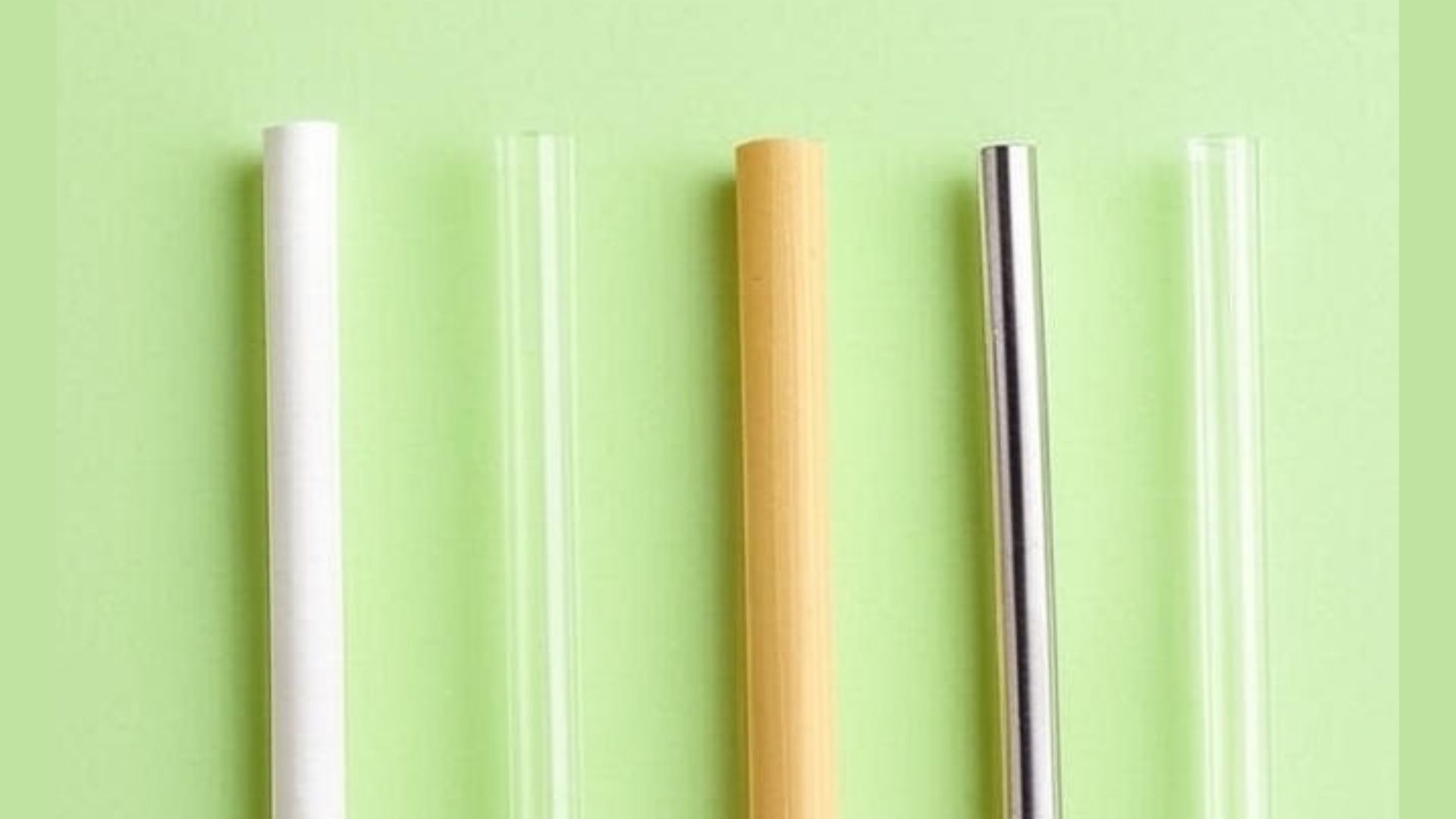
Myth 1: Is the Paper Straw Truly Synonymous with Sustainability? Its Waterproof Coating and Origin Hide a "Gray Area"!
After single-use plastic straws were banned, paper straws seemed to become the most widespread alternative. But have you noticed that they often soften on contact with liquid, affecting the drink's flavor, and sometimes warp before you finish your drink? Beneath the "eco-friendly" veneer of paper straws, multiple hidden concerns lurk.
Firstly, in order to make paper straws durable and waterproof, manufacturers add chemical coating. Even if specific substances like PFAS are called out, as long as the regulations do not explicitly prohibit them, other potentially toxic coatings may still be used. This essentially operates in a gray area—a change in name, but not in substance! These chemicals not only contribute to environmental pollution but may also release microplastics during the decomposition process.
Secondly, the source of the paper pulp is also a major issue. Besides coming from existing forests, there are now new channels involving recycled paper pulp. Consumers will never truly know where the paper straw they hold came from or whether it genuinely adheres to sustainable forestry standards. Furthermore, the production process of paper straws is energy- and water-intensive and often requires bleaching, further increasing the environmental burden. Finally, their poor user experience leads to numerous customer complaints, with the straw deforming before they can even finish a single drink.
- User experience: Absorb water and soften easily, making them unsuitable for hot beverages and harming the customer experience.
- Waterproof Coating: Chemical coatings remain a hidden concern and may still release harmful substances or microplastics.
- Pulp Source and Manufacturing Process: Ambiguous sourcing, compounded by issues like bleaching and high energy consumption.
- Customer Acceptance: Customers generally dislike the soggy texture and warping issues of paper straws, leading to a poor user experience.
Myth 2: Is PLA Straws Being "Biodegradable" Truly Problem-Free? Taiwan's Recycling System Simply "Won't Accept It"!
PLA straws, with their plastic-like appearance and the label of "biodegradable straw," once became a new favorite in the market. However, the existence of PLA straws in Taiwan is highly contradictory and peculiar. Even though Taiwan's Ministry of Environment explicitly banned PLA tableware in eight major public venues in August 2023, PLA straws were curiously excluded. This in itself is a phenomenon worthy of deep consideration.
PLA (Polylactic Acid or Polylactide) is classified as a "biodegradable plastic," and theoretically, it can be broken down by microorganisms and converted into carbon dioxide under the high-temperature, high-humidity conditions of industrial composting.
However, the problem is this: Taiwan currently has no legislation for PLA recycling or composting. Even if businesses collect and compost it, the compost cannot be legally sold, breaking material and financial circulation and making end-of-life processing a major bottleneck.
Even more confusing is that although PLA is classified as OTHER for recycling, its appearance is indistinguishable from general plastic, making it impossible for the public to identify. Consequently, it often ends up being discarded as general waste. This makes the existence of PLA straws in places like Taiwan equivalent to that of plastic straws. After years of use, there’s still no complete end-of-life solution, meaning their environmental burden is essentially the same as traditional plastic straws.
- Regulatory Loophole: While PLA tableware has been banned in Taiwan, only straws were excluded, creating a peculiar gray area.
- Lack of Recycling Mechanism: Without regulatory and infrastructure support, the “biodegradable” promise is essentially meaningless.
- Difficult for the Public to Identify: Looks like regular plastic, causing mis-sorting and mostly ending up in landfills or incinerators.
- Actual Zero Benefit: In Taiwan, PLA straws are disposed of like regular plastic, offering little environmental benefit.
Myth 3: Are Plant Fiber Straws Perfect? Unmasking the Truth of "Plant Fiber + Plastic" Composites!
Plant fiber straws made from agricultural waste such as tea grounds, coffee grounds, bagasse, and pineapple residue sound like the perfect plastic alternative. Consequently, they have gained significant popularity in the market, especially since they can be molded into various diameters. For Taiwan, the "Kingdom of Bubble Tea," having products with large diameters is particularly crucial.
However, its essence is merely a "biodegradable plastic straw" that has been mixed with plant fibers to reduce the plastic content. In the classification system for Taiwan's Eco-Label, these products are currently categorized as "biodegradable plastic straws" rather than purely natural products. This signifies that they still contain plastic components.
Furthermore, in order to shape these loose plant fibers, binding agents must be added during the manufacturing process. The composition of these binders, much like the coatings on paper straws, may contain unknown chemical substances, posing potential health concerns. Moreover, the shelf life of them presents a challengeSome industry operators have reported that even when unopened, they begin to "become brittle" after
6-12 months of storage, affecting product longevity and user experience.
- Fundamental Problem: It's not purely natural, but a composite mixture of "Plant Fiber + Biodegradable Plastic."
- Binding Agent Crisis: The composition of the necessary binding agents for shaping is unknown and may contain potential chemical substances.
- Storage Challenges: Prone to becoming brittle, which compromises both product longevity and user experience.
- Environmental Classification: In Taiwan, it is still classified as a biodegradable plastic straw, meaning its "purely natural" image is questionable.
Myth 4: Are Reusable Straws the Most Eco-Friendly? The Environmental Challenges of
"Over-Consumption" and "Cleaning"!
Reusable straws, such as stainless steel or bamboo straws, appear at first glance to be the ultimate solution for eco-friendly tableware. However, aside from the difficulties of cleaning and hygiene (their opaque nature makes it hard to clean the interior thoroughly, leading to potential bacterial growth), there is an even more critical hidden pollution: people "over-consuming" reusable eco-friendly products.
When consumers are drawn to the "eco-friendly" concept and purchase these straws in large quantities, they may ultimately leave them unused at home or even discard them due to inconvenient cleaning, troublesome carrying, or poor user experience. These products that are "manufactured but not effectively reused" still cause resource consumption and carbon emissions at the production end, creating a form of environmental pollution. True sustainability isn’t just about choosing reusables—it’s also about avoiding over-consumption and using them consistently.
- Cleaning and Hygiene Challenge: Opaque materials make thorough cleaning difficult, easily leading to bacterial growth, which affects user acceptance.
- Production-Side Pollution: Over-consumption and non-use lead to wasted resources and carbon emissions from the production of these items.
- "Pseudo-Eco" Behavior: Failure to reuse effectively results in eco-friendly products being relegated to "single-use" waste.
- Resource Waste: Mass production without adequate utilization deviates from the original intention of a plastic-reduction lifestyle.
Myth 5: Are Eco-Friendly Straws Always More Expensive? The Conflict Between Market Status Quo and the New Generation of Consumption Views!
Many assume eco-friendly tableware or alternative straws are always pricier than plastic. For cost-sensitive catering, this is a challenge. Plastic straws are very cheap—around 0.01 NTD each. While cheaper paper straws exist, they often soften quickly and use questionable pulp. More durable paper straws cost more due to higher weight, thickness, and energy- and water-intensive production.
However, it is worth noting that the new generation of consumption views is changing. Data shows that over 80% of the younger generation accepts paying up to a 10% premium for eco-friendly products. This indicates that the market acceptance of "green consumption" is rising, and consumers are willing to pay a premium for genuine environmental sustainability. For catering businesses, investing in high-quality eco-friendly straws isn’t just about compliance—it’s also a strategy to enhance brand image and attract customers who value carbon reduction and sustainability.
- Traditional Cost Concept: Plastic straws are extremely low cost, and eco-friendly straws are generally perceived as more expensive.
- The Cost Dilemma of Paper Straws: Cheap ones are poor quality, while durable ones are high cost and require more energy and water for production.
- New Generation Consumption View: The majority of younger consumers are willing to pay a premium for eco-friendly products.
- Brand Value Enhancement: Choosing genuinely eco-friendly options can elevate a catering brand's image, attract target customers, and deliver intangible value.
2026’s “Truly Eco-Friendly” Straw Choice: Natural Grass Straws
Among eco-friendly straw materials, one force of nature— Grass straw— is quietly becoming the new star of eco-friendly tableware in 2026.
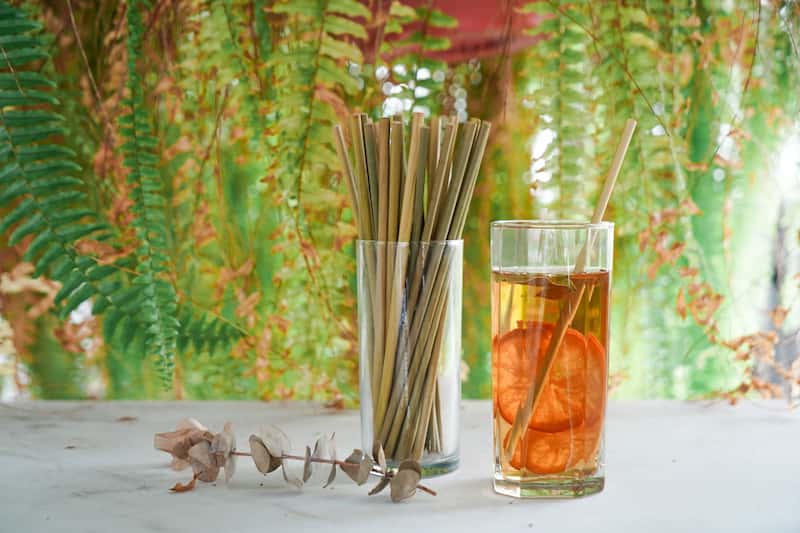
The Grass straw is fully plant-based, not a composite, and tackles the myths’ core issues:
- Myth 1: Chemical Coating Problem? Grass strawrequires no chemical processing or waterproof coating. As an aquatic plant, it naturally possesses a waterproof membrane—silica—giving it inherent water resistance, guaranteeing zero additives, and eliminating concerns about chemicals and microplastics.
- Myth 2: End-of-Life Decomposition Problem? Grass strawcan decompose under natural conditions, returning to the earth like a fallen leaf. Whether discarded in compost bins, landfills, or even inadvertently released into the natural environment, it naturally breaks down without causing long-term environmental pollution.
- Myth 3: Adhesive Problem? Grass Straw is naturally a hollow plant stem, much like water spinach, and therefore does not require the complex process of crushing, reshaping, and re-adhering. It maintains its natural form, eliminating all concerns regarding chemical adhesives.
- Myth 4: Cleaning Problem? For catering businesses and consumers, a key advantage of the Grass Straw is that it needs no cleaning. Disposable after use, it saves cleaning time and water, avoiding bacterial concerns—convenient and safe.
Choose “Truly Eco-Friendly” by Knowing the Truth!
True sustainability isn’t about labels but the full life cycle from production to decomposition.
We hope this article helps businesses and consumers see the truth behind eco-friendliness!
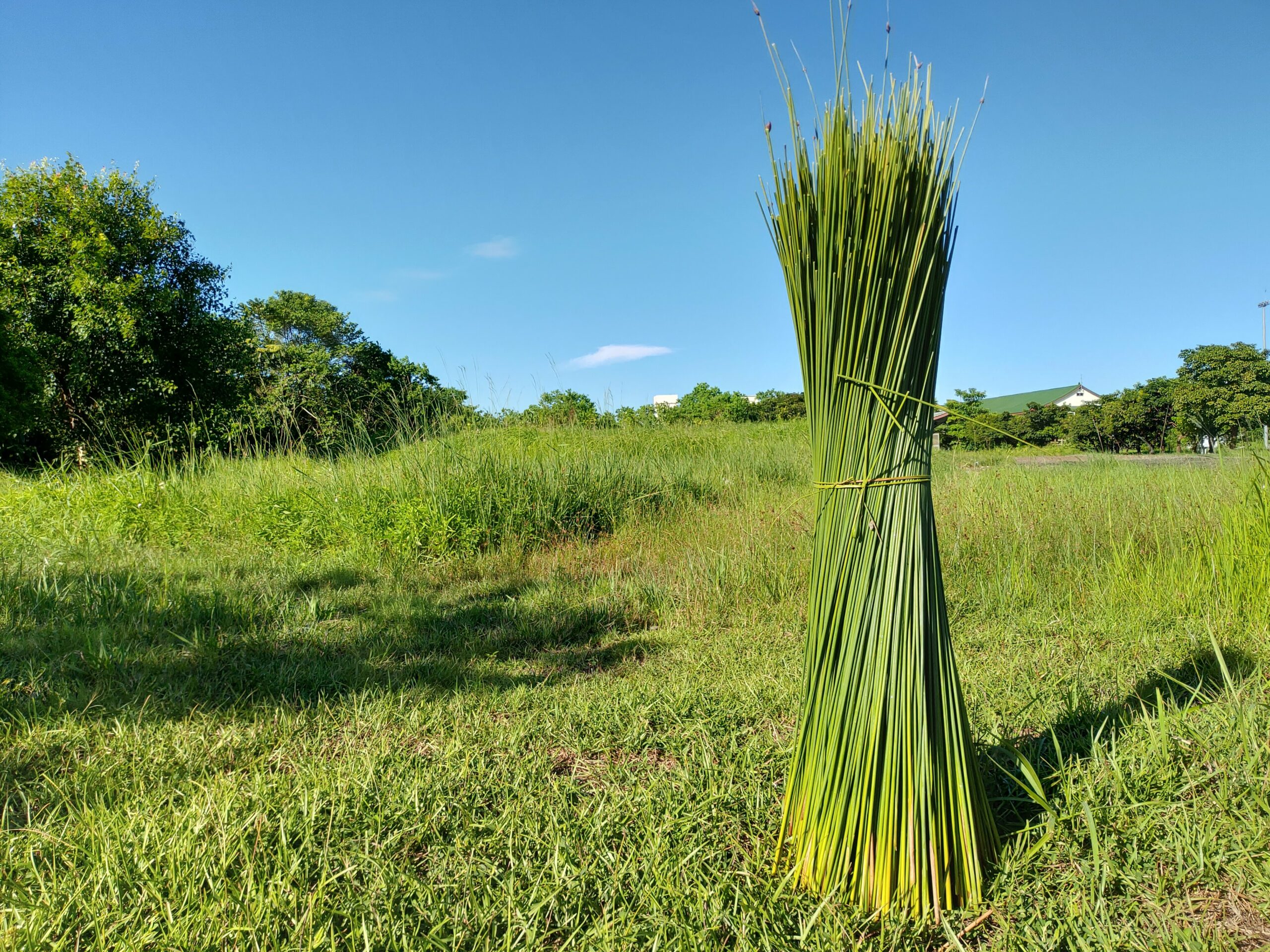
蒲草吸管是用一種叫做 蒲草(Lepironia Articulata) 的植物,直接裁切、烘乾後做成的。蒲草本身具有天然的中空結構與堅韌纖維,因此天生就長得像吸管,不需要加工,也沒有任何添加物。保留了植物原本的顏色、紋路和粗細,所以每一支都是獨一無二的存在。
其實蒲草以前常拿來做榻榻米,如今變成更環保的日常選擇。
蒲草吸管從採收到成品,全程使用天然工法,不添加任何化學藥劑。製作流程包含:
1.清洗淤泥:去除泥沙與雜質
2.裁切成吸管長度:依飲料店常用尺寸製作
3.去除外膜:提升潔淨度與使用手感
4.烘乾脫水:確保耐用度並避免發霉
5.紫外線+臭氧雙重消毒:達到食品級安全
這樣的製程讓蒲草吸管保持自然原始的狀態,沒有塑膠、沒有加工物質,也因此每根吸管的紋路、顏色都略有不同,是天然產品的特色。