In recent years, with the rise of global plastic reduction awareness, many businesses and consumers have started switching to PLA straws, which are claimed to be "biodegradable." This type of plant-based straw, made from agricultural waste like cornstarch or sugarcane, sounds eco-friendly and benign and seems to be the ideal solution for plastic pollution. However, did you know that, in many situations, the difficulty of decomposing PLA straws might be higher than that of the traditional plastic straws you imagine, potentially making them another hidden source of pollution?
Today, we will delve into the "ugly truth" of PLA straws, exposing their decomposition dilemma across various global regions, and explaining why this "eco-friendly" option may not be as good as it seems on the surface.
The Trap of "Biodegradable": Requires Industrial Composting
To understand the problem with PLA straws, one must first clarify the term "biodegradable." It does not mean, as many imagine, that the product will break down on its own when discarded in the natural environment. The definition of biodegradable plastics according to international standards (such as EU EN 13432 or US ASTM D6400) refers to breaking down in a specific and strict industrial composting environment.
At High temperature(usually requires 58°C or above), high humidity(usually requires over 80%), and under the action of specific microorganisms, they decompose into carbon dioxide, water, and biomass within a period (usually 90-180 days).
💡 Key Takeaway: This decomposition process is called "Composting." If these precise conditions are lacking, PLA straws cannot decompose effectively.
The Chemical Nature of PLA: "OTHERS" in a Plant-Based Disguise
PLA (Polylactic Acid) Although the raw materials come from renewable agricultural waste, such as cornstarch, sugarcane, or cassava, making it a typical "Bio-based Plastic," these plant sugars are converted into polylactic acid polymer through chemical processes like fermentation and polymerization.
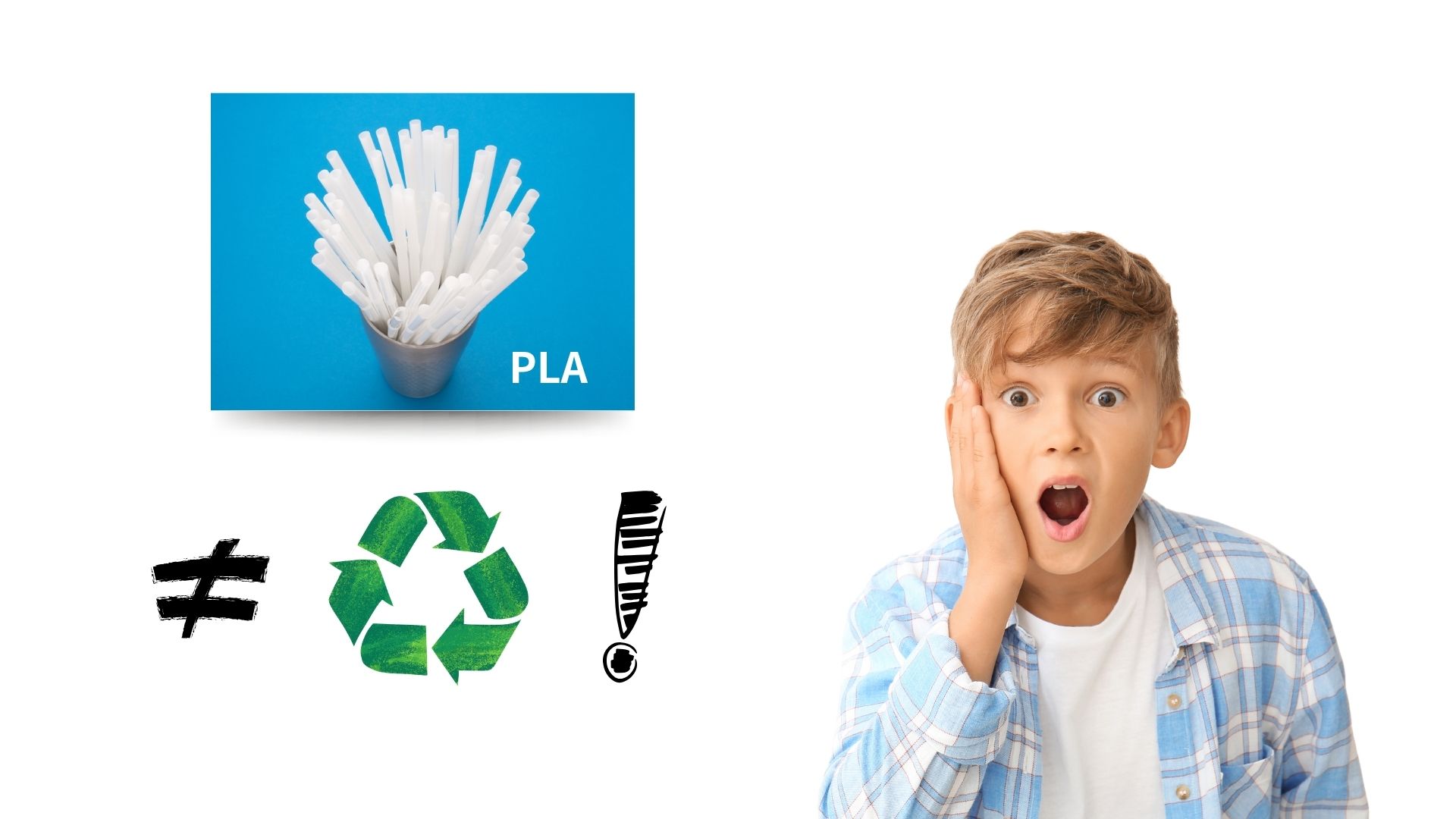
💡 Key Takeaway: Despite the natural raw materials, PLA's molecular structure is already a polymer after polymerization. In many countries worldwide, PLA is usually classified as OTHERS . This means that it does not belong to the six major categories of common plastics like PET, HDPE, PVC, LDPE, PP, and PS, and requires independent handling in recycling classification.
The Practical Challenge: Lack of Industrial Composting
Theoretically, PLA straws should be sent to specialized industrial composting facilities for processing. However, this is precisely the biggest challenge commonly faced across all regions worldwide
- Facility Scarcity: In many regions worldwide, industrial composting facilities capable of processing PLA straws are extremely scarce and not yet widespread. The waste disposal systems in most cities are still primarily based on incineration and landfilling.
- Collection Difficulty: Even if facilities exist, PLA straws need to be sorted separately from general waste to enter the composting process. But in real life, consumers often find it difficult to correctly identify and sort PLA, leading to it often being mixed into general waste or traditional plastic recycling.
International Regulations and Restrictions: Many Countries Are Saying No to PLA Tableware!
Due to the decomposition and recycling difficulties mentioned above, more and more countries and regions worldwide have begun to seriously address the issue of PLA tableware and are gradually implementing restrictions or bans.
This highlights that PLA is not a foolproof plastic substitute:
- European Union(EU): Since July 2021, the EU's Single-Use Plastics Directive (SUPD) has banned various single-use plastic products, including plastic cutlery, plates, and straws. Although the directive primarily targeted traditional plastic, its spirit is to promote reusable and truly decomposable alternatives. Many member states have consequently adopted a stricter attitude towards "biodegradable" plastics like PLA, believing that they do not effectively solve the problem of plastic pollution. Furthermore, some EU member states have specifically restricted their scope of use.
- Taiwan: Taiwan’s Environmental Protection (EPA) classified PLA tableware as plastic tableware in 2023. Starting in August, the provision of cups, bowls, plates, dishes, and meal boxes made of PLA material was banned in eight major locations, including public sectors, schools, department stores, hypermarkets, supermarkets, chain convenience stores, chain fast-food restaurants, and restaurants with storefronts. This gradually commenced the restriction on PLA products.
- Other Countries/Regions: Many countries, cities, and regions have banned single-use plastics (including some “biodegradable” ones), due to recycling and decomposition challenges and their continued microplastic generation. This shows the utility and environmental claims of “biodegradable” plastics are facing stricter global scrutiny.
The Awkward Paradox: Harder to Dispose of Than Traditional Plastic
When PLA straws cannot enter industrial composting facilities or be correctly recycled, their fate is often:
- Interference with Traditional Plastic Recycling: If PLA straws are mistakenly thrown into the recycling stream for traditional plastics (such as PET, PP), they become contaminants in the recycling chain due to their different structure and melting point. This lowers the quality of the recycled material and may even cause the batch of recyclables to be scrapped, resulting in greater resource waste.
- The False Decomposition in Landfills: In landfills lacking high temperature, high humidity, and specific microorganisms, the decomposition rate of PLA straws is extremely slow, nearly indistinguishable from traditional plastic. It will persist in the environment for a long time, and under physical weathering, it will still break down into hard-to-detect microplastics, continuing to cause pollution. Ironically, although it claims to be biodegradable, in terms of actual disposal, it is actually more troublesome than traditional plastic, which has clear recycling channels.
Rethinking "Green" Definitions: Seeking True Plastic Alternatives
The case of PLA straws reminds us that the "biodegradable" label is not a panacea.
True environmental sustainability requires considering the product's entire lifecycle, from raw materials, production, and use to final disposal.
When we seek plastic alternatives, we should focus more on those that:
- Truly Able to Return to Nature: These types of materials are usually pure, natural, additive-free organic matter that has not been highly processed that can harmlessly decompose in general natural environments (such as soil and water bodies) without generating microplastics.
- Simple Production Process: Require no chemical processing or additives, reducing the environmental footprint and toxicity of the production process.
- Reusable or Truly Burden-Free Single-Use: Encourage prioritizing the selection of reusable eco-friendly tableware; if it is a single-use requirement, then one should choose materials that can truly integrate into the natural cycle and leave no trace.
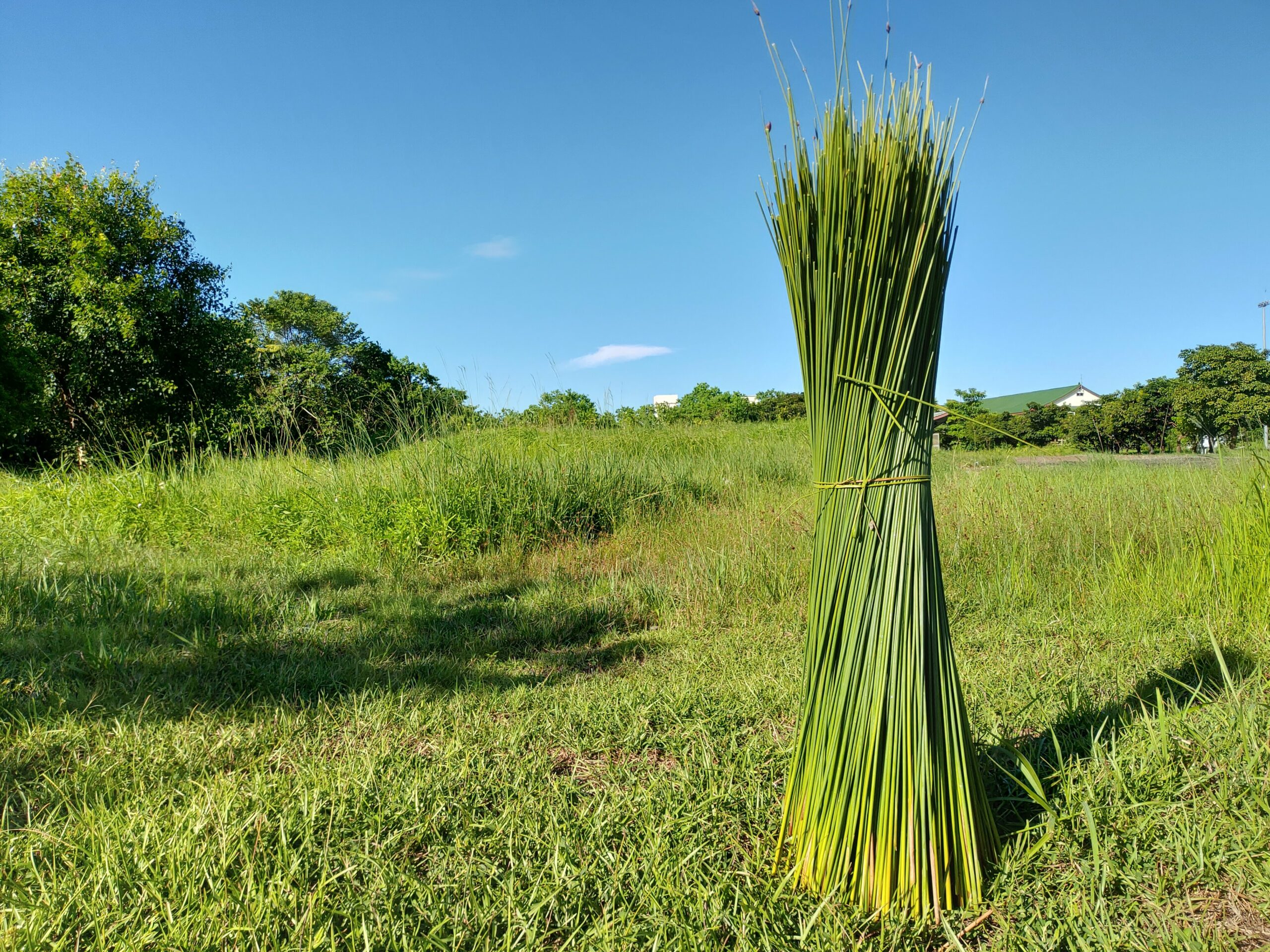
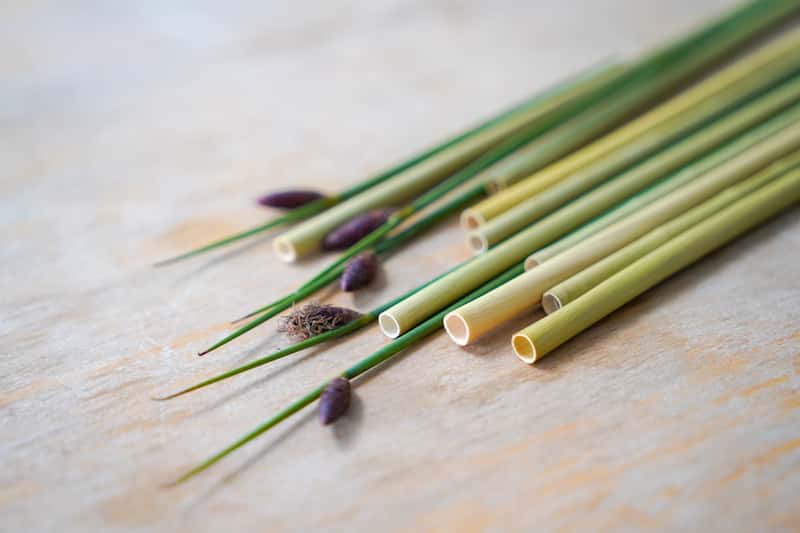
For example, Grass straws are one type of pure, natural, additive-free plant-based straw that meets these standards. It comes directly from natural aquatic plants, requiring no complex processing. After use, it can decompose in the natural environment, truly fulfilling the environmental concept of "taken from nature, returned to nature," and providing us with a more ideal choice for eco-friendly tableware.
Rethinking Green Claims: Responsible Choices
PLA吸管的真相,揭示了綠色消費並非總像表面那樣簡單。
在減塑的路上,我們需要的不只是熱情,更需要洞察力。
每一次的消費選擇,都影響著我們的健康與地球的未來。
蒲草吸管是用一種叫做 蒲草(Lepironia Articulata) 的植物,直接裁切、烘乾後做成的。蒲草本身具有天然的中空結構與堅韌纖維,因此天生就長得像吸管,不需要加工,也沒有任何添加物。保留了植物原本的顏色、紋路和粗細,所以每一支都是獨一無二的存在。
其實蒲草以前常拿來做榻榻米,如今變成更環保的日常選擇。
蒲草吸管最大的不同在於:它是真正的天然植物本體,而不是加工製品。
因此在原料、製程、使用體驗與環境影響上,都和其他一次性吸管完全不同。
1.原料差異最大——天然 vs. 加工
- 蒲草吸管:整株蒲草的莖。
- 紙吸管:紙漿+黏著劑+防水劑。
- PLA / PBS 吸管:植物澱粉+塑膠原料再加工。
- 植物纖維吸管:植物粉+可分解塑膠混合而成。
- 塑膠吸管:石化塑膠。
2.製程加工程度不同——低加工 vs. 高加工
- Grass straws:
清洗 → 裁切 → 去膜 → 烘乾 → 消毒(全程無化學) - 其他吸管:
需要加熱、造粒、擠壓、成型、塗層等多道加工程序。
重複使用是環保的,但「前提是確實且多次」重複使用,才能抵銷產品從製造到廢棄的整個生命週期對環境的影響。如果為了環保而過度購買、囤積或不善加使用,反而會造成浪費。
指的是企業或品牌,透過「誇大、模糊或不實」的行銷手法,讓消費者誤以為其產品或服務對環境非常友善,但實際上對環境的效益卻微乎其微,甚至根本沒有。