Thought it was eco-friendly? Turns out it could be just a clever marketing trick.
As environmental awareness rises, consumers are increasingly willing to pay for “eco-friendly” products. This green wave has not gone unnoticed—many brands are seizing the opportunity, dressing their products in a “green” cloak and tempting you with seemingly good promises. Yet behind this seemingly thriving eco-market lurks a deceptive marketing tactic known as the core of Greenwashing. It doesn’t just take advantage of your goodwill—it also hides the real environmental issues. So, what exactly is greenwashing? How can you spot these fake eco-friendly traps, protect your wallet, and safeguard our shared planet? In this article, we’ll take you inside this silent battle, exposing the true face of so-called “eco-friendly” products.
What is Greenwashing?
Greenwashing is the term combine with “Green” and “Washing.” Simply put, it refers to companies or brands that exaggerate, obscure, or misrepresent their environmental claims, making consumers believe their products or services are highly eco-friendly, when in reality the environmental benefits are minimal—or sometimes nonexistent.
For example, a brand might highlight that their product is “made from recycled materials. But they conveniently omit that the production process generates massive carbon emissions and water pollution; or they claim the product is “biodegradable,” while in reality only a small fraction of the material can break down, with most of it still being non-degradable plastic. These are common greenwashing tactics.
Greenwashing Tricks You Need to Know: How to Spot Fake Eco-Friendly Marketing
To avoid falling into greenwashing traps, the first step is learning to recognize them. Here are some of the most common “sustainability” marketing tricks companies use:
- Vague and misleading wording: Brands frequently rely on vague labels—“natural,” “green,” “eco-friendly”—without any supporting data. If you see only buzzwords and no specifics, beware of greenwashing.
- Meaningless eco-labels: Have you ever noticed an unfamiliar eco-label on a product’s packaging? It’s likely not certified by any recognized authority, but instead created by the brand itself. Genuine Taiwanese eco-labels or carbon footprint certifications come with official standards and a verifiable website for confirmation.
- The Truth Behind “Biodegradable” Exaggerations: The term “biodegradable” is often exploited for greenwashing. Take PLA (polylactic acid), a common “biodegradable” straw material for example, although plant-derived and visually similar to plastic, it requires strict conditions, breaking down in high-temperature, high-humidity industrial composting facilities.
However, Industrial composting facilities in Taiwan are currently very limited. These straws often end up treated as regular waste, decomposing extremely slowly—essentially like plastic. More importantly, during their incomplete breakdown, they can fragment into tiny microplastics, posing long-term risks to the environment and the food chain. - Downplaying environmental impact: This is one of the most common greenwashing tactics. Companies highlight a minor eco-friendly feature of their product while deliberately hiding more serious environmental issues. For example, promoting a straw as “made of paper” but omitting the high energy consumption involved in its production.
- False or exaggerated claims: Making claims without factual basis: For example, asserting “100% zero pollution” , which is nearly impossible in reality. When a claim sounds too perfect, approach it with skepticism.
- Environmental claims unrelated to the product: The product itself may be environmentally harmful, yet the company heavily promotes actions like “donating to environmental organizations” or “planting a tree.” This is a diversionary green marketing tactic, attempting to mask the product’s flaws through external initiatives.
6 Ways to Spot Greenwashing and Shop Real Eco-Friendly Products
Shop Smarter: 6 Tips to See Through Greenwashing & Choose Truly Sustainable Products
- Is It Truly Certified?
Look for products with Environmental Certification Label by official or third-party verified certifications. If a product says it’s eco-friendly but offers no traceable eco-labels, it’s probably just a marketing gimmick. - Does the brand back up its eco-claims with real actions?
A Truly green brands show real quantifiable data and disclose their sustainability efforts in official reports. Check the company website to see if they publish comprehensive information on carbon emissions, waste management, and emission reduction targets—key metrics that reflect their ESG impact. - Is the product’s full life cycle transparent?
A sustainable product takes responsibility for its full journey—from the field to your hands, and finally back to the earth. Highlighting only one part? That’s likely skipping the hard truths. - Does the packaging make it look greener than it really is?
Just because it’s wrapped in green, shows leaves, or says “from nature” doesn’t mean it’s truly sustainable. Look beyond the packaging—read ingredients and certifications. - Does it highlight only one benefit while ignoring other drawbacks ?
Ask yourself, is the product truly sustainable from start to finish? A shoe might claim eco-friendly recycled materials, yet its factory could overlook labor rights. Real sustainability includes every step—and that’s where CSR matters. - Does this product truly support sustainability and the SDGs?
Check if the product or company aligns with a UN Sustainable Development Goal—like SDG 12 (Responsible Consumption and Production)—to make a broader, informed assessment.
Ditch Greenwashing: Choose Grass Straws

In an era where green marketing is everywhere, being a savvy consumer has never been more important—especially the products like biodegradable straws. We must to understand the complex processing conditions behind them, to prevent them from becoming another form of “greenwashing.”
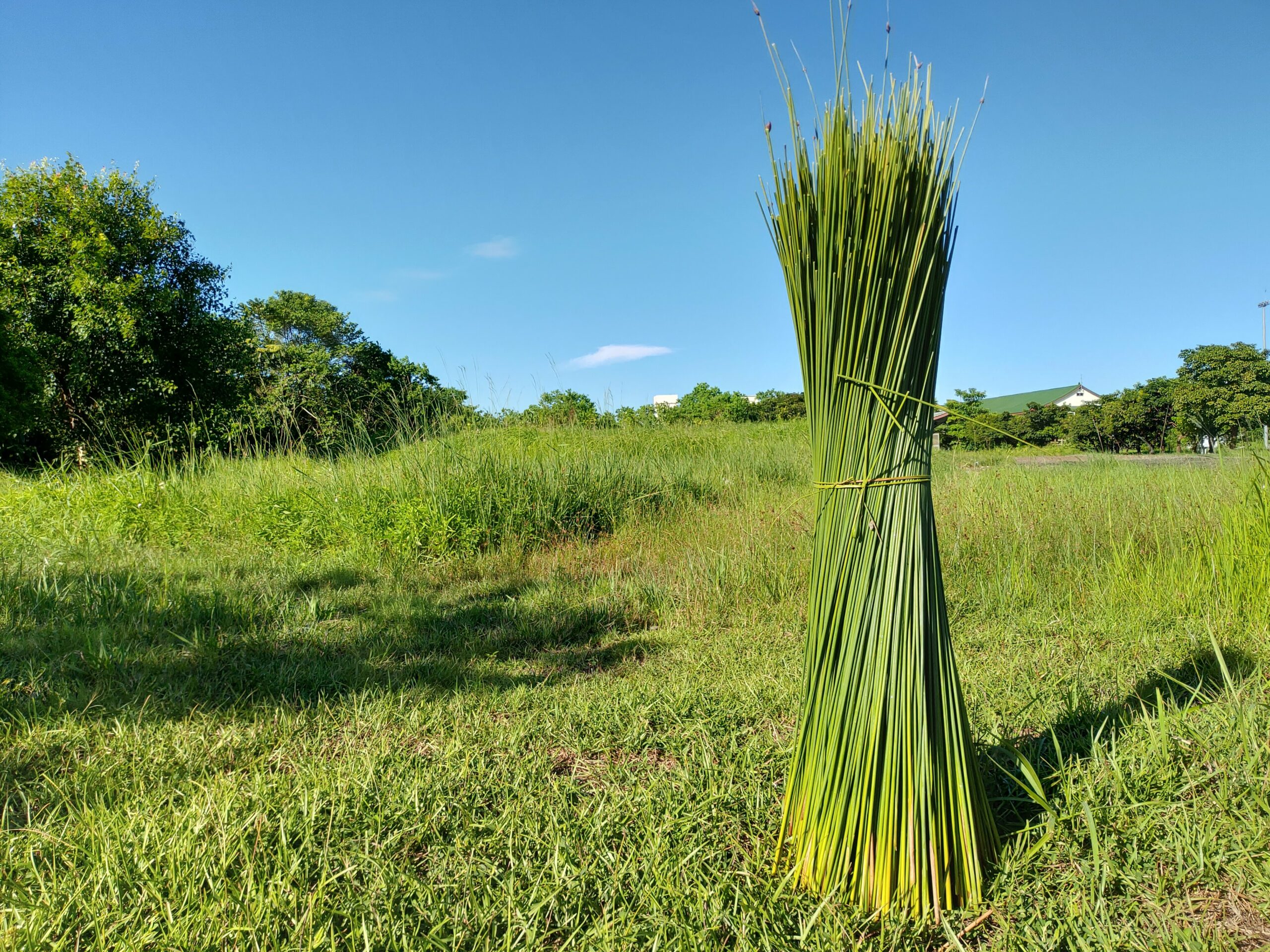
This is why Grass strawcan stand out. The strength of grass straw is that it can biodegrade naturally. Without relying on Taiwan’s scarce industrial composting facilities, once used, it can be disposed of in the food-waste bin or buried in a plant pot, truely completes the “return to the earth” cycle, fundamentally preventing microplastic pollution and adding no extra burden to the environment.
Every purchase is a vote for the values you believe in. By verifying claims, rejecting greenwashed products, and supporting brands that genuinely practice social responsibility, we drive the market toward greater transparency and true sustainability.
Spot greenwashing, be a force for change !
From today, start using 6 questions to evaluate products.
Say no to greenwashing—support truly sustainable brands.
蒲草吸管是用一種叫做 蒲草(Lepironia Articulata) 的植物,直接裁切、烘乾後做成的。蒲草本身具有天然的中空結構與堅韌纖維,因此天生就長得像吸管,不需要加工,也沒有任何添加物。保留了植物原本的顏色、紋路和粗細,所以每一支都是獨一無二的存在。
其實蒲草以前常拿來做榻榻米,如今變成更環保的日常選擇。
紙吸管:原料來源不明、製造過程更耗能、黏著劑/防水塗層可能會溶解,且無法回收。
PLA吸管:在自然環境無法被分解,只能在「工業環境高溫高濕度下」分解,現有回收體系無法處理。
重複使用是環保的,但「前提是確實且多次」重複使用,才能抵銷產品從製造到廢棄的整個生命週期對環境的影響。如果為了環保而過度購買、囤積或不善加使用,反而會造成浪費。
會,但「前提是必須達到特定條件」,才能「完全」分解,需要特定的溫度(溫度超過 58°C)、高濕度、強大的微生物環境。一般環境,例如海邊、土壤、路邊、公園、自然界,都「幾乎不會分解」,所以它們被批評為「名義上可分解,實際上難以分解」。
Grass straw是由天然植物(蒲草)直接裁切、烘乾後製成,不含塑膠、無化學添加,使用後能在自然環境中分解。
biodegradable straws(例如 PLA、PBS、植物纖維吸管)多半是以「生物塑膠或部分植物澱粉」再加工製成,需要特定的環境條件才能分解,在自然環境中通常不會真正消失。